Category: Kolkata

  • Top IT Companies Driving Kolkata’s Tech Boom (2026 Edition)

    Top IT Companies Driving Kolkata’s Tech Boom (2026 Edition)

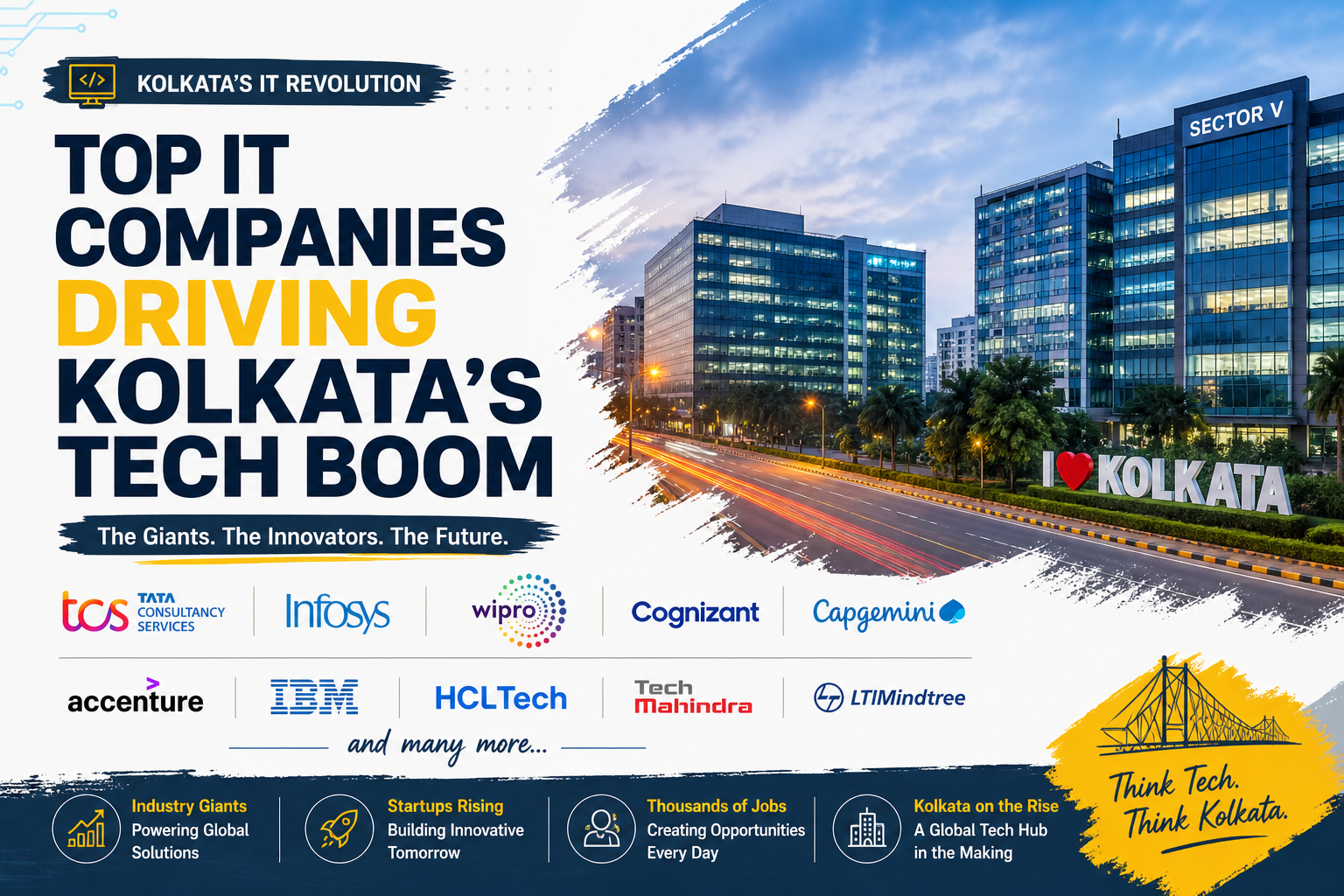
    Kolkata’s IT ecosystem has matured quietly but confidently. Walk through Salt Lake Sector V or New Town and you’ll notice something interesting—this isn’t a one-company show. It’s a layered ecosystem where legacy giants, global corporations, and fast-growing tech firms all coexist.

    In 2026, that diversity is exactly what’s powering the city’s tech growth.

    The Established Giants: Still Leading the Charge

    Yes, companies like TCS, Infosys, and Wipro remain the backbone. But the ecosystem goes much deeper.

    Take Cognizant, for example. It has a massive workforce in Kolkata and plays a huge role in hiring fresh graduates every year. Many professionals here start their careers with Cognizant before branching into niche domains.

    Then there’s Capgemini, which has steadily expanded its Kolkata presence, especially in consulting, cloud, and digital transformation services.

    IBM also continues to operate in the city, focusing on enterprise solutions, AI, and hybrid cloud—areas that are shaping the global IT landscape.

    And let’s not forget Accenture, which has been strengthening its footprint with roles in analytics, automation, and digital engineering.

    These companies bring international exposure, structured career paths, and large-scale project opportunities—something that keeps Kolkata competitive with bigger IT cities.

    Global & Niche Players Expanding Presence

    Beyond the usual names, several other companies are contributing significantly to Kolkata’s tech ecosystem.

    Tech Mahindra has a strong presence in telecom and enterprise tech solutions, while HCLTech is gradually expanding operations with a focus on engineering and R&D services.

    Companies like LTIMindtree are also becoming increasingly visible, especially after the merger that strengthened their market position globally.

    These firms may not always be talked about as much, but they play a crucial role in diversifying job opportunities and bringing in specialized projects.

    Startups & Emerging Tech Firms: The Real Momentum Builders

    If the big companies are the foundation, startups are the spark.

    New Town, in particular, is becoming a hotspot for smaller tech firms working in:

    • Fintech platforms
    • AI-based SaaS tools
    • Edtech solutions
    • Digital marketing tech

    What’s different now is mindset. Unlike earlier years, startups in Kolkata are no longer trying to copy models from Bengaluru—they’re building for specific problems and niche audiences.

    Many of them are also remote-first or hybrid, which means they can attract talent beyond the city while still operating from Kolkata.

    Why More Companies Are Choosing Kolkata in 2026

    The presence of multiple IT giants isn’t random—it’s strategic.

    Cost efficiency continues to be a major factor. Compared to Bengaluru or Pune, companies can operate at significantly lower costs here.

    Talent retention is improving too. Earlier, professionals would leave Kolkata for better opportunities. Now, many are choosing to stay—or even return—because the gap in opportunities is shrinking.

    Infrastructure upgrades in New Town, including IT parks and improved connectivity, are making it easier for companies to scale.

    And importantly, quality of life plays a role. Less traffic stress, lower living costs, and a familiar cultural environment make Kolkata attractive for long-term careers.

    What’s Trending in Kolkata’s IT Scene Right Now

    The companies driving Kolkata’s IT boom are also shaping how work is evolving:

    • AI integration across roles – not just developers, but analysts, testers, and even HR teams are using AI tools
    • Cloud-first strategies – migration projects are at an all-time high
    • Cybersecurity hiring surge – driven by increasing digital risks
    • Hybrid work becoming standard – most companies now balance office and remote work

    This shift means professionals need to constantly upskill. The focus is no longer just on coding—it’s on adaptability.

    What This Means for Job Seekers

    For freshers and experienced professionals, this broader mix of companies is a big advantage.

    You’re no longer limited to just a few recruiters. Whether you want:

    • A stable job in a large IT firm
    • A fast-paced role in a startup
    • Or a niche tech position in a global company

    Kolkata now offers all three.

    The Human Side of the IT Boom

    Despite all the growth, Kolkata hasn’t lost its character.

    Step out of an office in Sector V after a long day, and you’ll still find people grabbing chai, discussing football, or planning weekend trips. The pressure exists—but it’s balanced with a certain ease that’s hard to find in bigger metros.

    Final Thoughts

    Kolkata’s IT boom isn’t driven by one or two giants—it’s powered by a wide network of companies including Cognizant, Accenture, Capgemini, IBM, and many more alongside TCS, Infosys, and Wipro.

    That mix is exactly what makes the ecosystem strong, resilient, and future-ready.

    Kolkata may not be the loudest tech city in India—but it’s definitely one of the smartest growing ones.
  • Art, Literature, and Music in Kolkata: The Soul of a Cultural Capital

    Art, Literature, and Music in Kolkata: The Soul of a Cultural Capital

    Kolkata: The Cultural Heartbeat of India

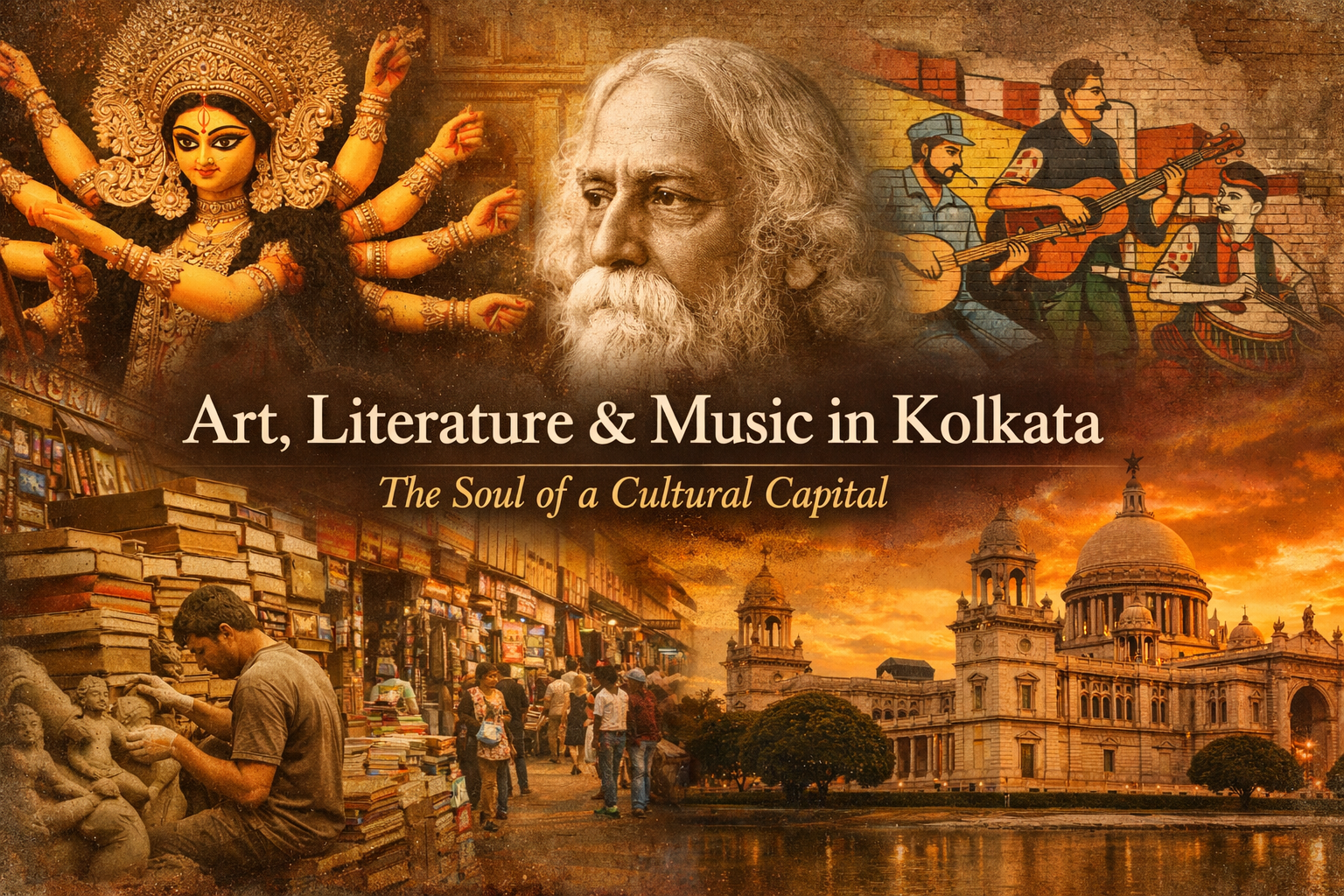
    Kolkata has long been regarded as the cultural heartbeat of India—a city where creativity is woven into daily life. Unlike many urban centers where art is confined to galleries or performances to stages, Kolkata lives and breathes culture in its streets, homes, and conversations.

    The city’s deep-rooted connection with art, literature, and music reflects a legacy shaped by history, intellectual movements, and an enduring passion for creative expression.

    A City Painted with Art

    Art in Kolkata carries a rich historical and emotional significance. The emergence of the Bengal School of Art, led by Abanindranath Tagore, marked a turning point in Indian art history. This movement sought to break away from Western influences imposed during colonial rule and instead revive traditional Indian styles, themes, and techniques. It was not merely an artistic revolution but also a cultural assertion of identity.

    The artistic culture of Kolkata thrives in its neighborhoods. Kumartuli, a traditional potters’ quarter, is one of the most iconic artistic hubs where artisans meticulously craft idols, especially for Durga Puja. These idols are more than religious figures—they are detailed sculptures that reflect skill, devotion, and generations of inherited craftsmanship. Each creation tells a story, blending mythology with artistic imagination.

    Street art and public installations have also gained prominence in recent years. Walls across the city display murals that depict social issues, heritage themes, and contemporary ideas. At the same time, art galleries and cultural centers promote modern and experimental works, giving young artists a platform to express themselves. This coexistence of classical and contemporary art forms keeps Kolkata’s artistic identity vibrant and ever-evolving.

    Literature: The Intellectual Pulse

    Literature forms the intellectual backbone of Kolkata. The city has produced some of the greatest literary minds, most notably Rabindranath Tagore. His contributions to poetry, music, and storytelling not only shaped Bengali literature but also earned global recognition, including the Nobel Prize in Literature. His works continue to influence writers, thinkers, and artists across generations.

    Kolkata’s literary culture extends far beyond its iconic figures. It thrives in everyday spaces—bookstores, libraries, and street-side stalls. College Street, often referred to as the intellectual hub of the city, is lined with countless bookshops offering everything from rare manuscripts to affordable textbooks. It is a place where ideas are exchanged as freely as books, attracting students, scholars, and curious minds.

    The city’s passion for literature is further reflected in events like the Kolkata International Book Fair, which draws millions of visitors each year. This event is not just about buying books; it is a celebration of knowledge, creativity, and cultural exchange.

    Another defining feature is the culture of “adda”—informal discussions that often revolve around literature, philosophy, politics, and art. These conversations, held in cafes, homes, and street corners, are an essential part of Kolkata’s identity. They represent a democratic space where ideas are shared, debated, and appreciated, keeping the literary spirit alive in a uniquely engaging way.

    Music: The Emotional Language of the City

    Music in Kolkata is deeply expressive and diverse, reflecting the emotional depth of its people. One of the most influential contributions comes from Rabindranath Tagore, whose compositions, known as Rabindra Sangeet, form an integral part of Bengali cultural identity. These songs blend poetic lyrics with soulful melodies, exploring themes of love, nature, devotion, and human emotion.

    The city also has a strong tradition of Indian classical music, with regular concerts and cultural gatherings that feature renowned performers. Classical ragas, devotional songs, and folk music continue to thrive, preserving the musical heritage of the region.

    At the same time, Kolkata embraces modern and experimental music. Independent bands, fusion artists, and contemporary musicians are redefining the city’s soundscape by blending traditional elements with global influences. This fusion creates a unique musical identity that resonates with both older and younger generations.

    Music is not limited to formal venues in Kolkata—it is a part of everyday life. From street performances during festivals to local cultural programs, music brings people together and fosters a sense of community. Even in casual gatherings, singing and musical expression often play a central role, highlighting the city’s deep emotional connection to sound and rhythm.

    Theatre and Performing Arts

    In addition to art, literature, and music, theatre plays a significant role in the cultural fabric of Kolkata. The city has a long-standing tradition of stage performances that combine storytelling, music, and visual artistry. Bengali theatre is known for its powerful narratives, often addressing social, political, and philosophical themes.

    Local theatre groups and cultural organizations regularly stage performances, keeping this art form alive and relevant. These productions range from classical plays to modern interpretations, reflecting the changing dynamics of society while staying rooted in tradition.

    A Living Cultural Experience

    What truly sets Kolkata apart is the seamless integration of art, literature, and music into daily life. Festivals like Durga Puja transform the entire city into a vibrant cultural canvas. During this time, artistic creativity reaches its peak, with elaborate pandals, thematic decorations, literary influences, and musical performances creating an immersive experience.

    Historic landmarks such as Victoria Memorial serve as symbols of the city’s rich past while continuing to host exhibitions and cultural events. These spaces connect history with modern creativity, allowing people to engage with both heritage and innovation.

    In Kolkata, culture is not something distant or exclusive—it is lived and experienced every day. Whether through a painting on a wall, a poem in a book, or a melody in the air, the city continuously expresses its identity through creativity.

  • Haunted Kolkata: Myths, Legends & Stories

    Haunted Kolkata: Myths, Legends & Stories

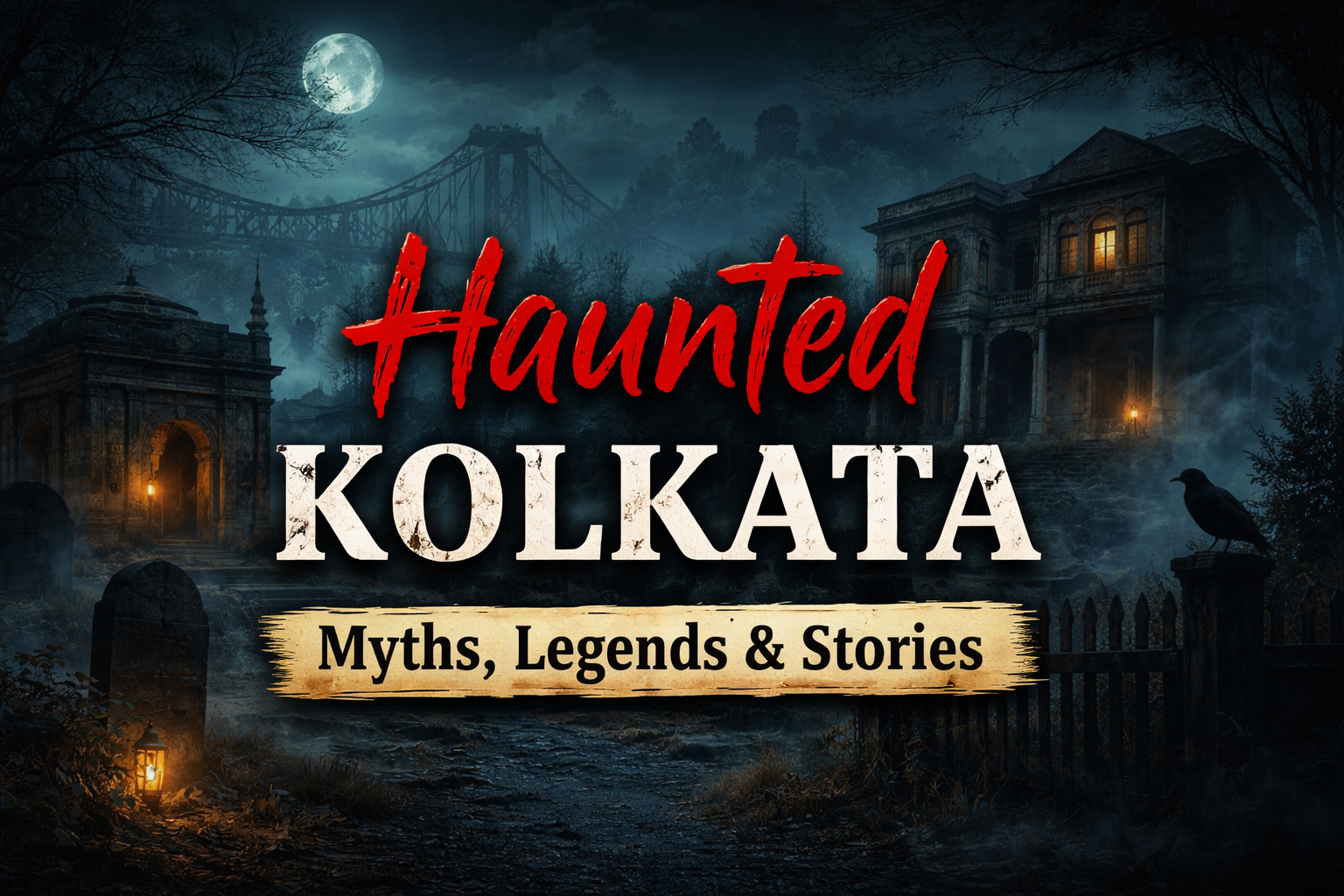
    Haunted Kolkata blog banner featuring a dark, foggy night scene with an old cemetery, abandoned colonial buildings, and Howrah Bridge under moonlight, with bold text ‘Haunted Kolkata: Myths, Legends & Stories

    6 Haunted Places in Kolkata That Still Feel Alive

    Kolkata is known as the City of Joy. But if you stay out a little longer—past the noise, past the last tram, past the familiar rush—you start noticing a different side of the city.

    It becomes quieter. Slower. Almost like it’s holding onto something.

    Because Kolkata doesn’t just carry history—it lives with it. And sometimes, people believe it refuses to let go.

    South Park Street Cemetery: Where Silence Feels Heavy

    One of the oldest cemeteries in the city, this place feels peaceful during the day. But as evening approaches, the silence changes.

    It’s not empty—it feels heavy.

    Visitors often describe an unexplained uneasiness. No dramatic sightings, no clear incidents. Just a strange feeling that someone—or something—is there, even when you’re alone.

    And that quiet discomfort is what stays with you.

    National Library: Footsteps in Empty Corridors

    Books, silence, and history—perfect combination for calm, right?

    Not always.

    The National Library has long been associated with stories of unexplained footsteps and strange movements at night. Security guards have shared experiences of hearing sounds in completely empty sections.

    No one ever finds anything.

    But the feeling of not being alone in a locked building? That’s enough to make anyone uneasy.

    Writers’ Building: Echoes of the Past

    Once the administrative heart during British rule, Writers’ Building carries a powerful historical weight.

    And maybe that’s why people say it never truly feels empty.

    There have been mentions of faint sounds—like typing, footsteps, or movement—late at night. Almost like the past is still working behind closed doors.

    It’s subtle. But deeply unsettling.

    Rabindra Sarobar Metro Station: The Last Train Feeling

    This is one of those places where the stories feel more modern, more relatable.

    Late-night commuters have often described a strange atmosphere here—especially when the platform is nearly empty.

    Some say they’ve seen figures on the tracks. Others talk about a sudden drop in comfort, like something isn’t right.

    It’s not loud or dramatic. It’s quiet… and that’s what makes it worse.

    Putulbari (The House of Dolls): Shadows Behind Windows

    Located in North Kolkata, this old mansion already looks eerie from the outside. Broken structure, dark windows, and a history that people don’t fully talk about.

    Locals believe the house has a disturbing past, and many avoid going near it after dark.

    There are stories of shadows moving inside, even though no one lives there.

    Whether true or not, the building itself tells a story you can feel just by standing nearby.

    Hastings House: A Presence That Lingers

    Hastings House is another place often mentioned in Kolkata’s haunted stories.

    People have talked about hearing footsteps, seeing figures, or sensing a presence—especially at night.

    The interesting part? These stories come from different people, at different times, yet they sound strangely similar.

    And that consistency is what keeps the mystery alive.

    Why Kolkata Feels Different at Night

    Not every city creates this kind of emotion.

    Kolkata moves slowly. It holds onto moments. And at night, that stillness becomes something deeper.

    You walk down a quiet lane, and suddenly you feel like you’re not alone. You turn back—nothing.

    Still, you walk faster.

    That’s Kolkata’s kind of fear. Not loud. Not visible. Just… present.

    From Folklore to Digital Stories

    What’s changing today is not the stories—but how we experience them.

    Earlier, these tales lived in conversations. Now, they live online.

    Creators are turning haunted Kolkata into reels, YouTube explorations, and podcasts. Old places are being rediscovered—not just as heritage, but as experiences.

    People are no longer just scared. They’re curious. They want to explore, document, and understand.

    Haunted Kolkata is becoming a mix of history, emotion, and modern storytelling.

    Fear, Imagination, or Something More?

    Not everyone believes in ghosts—and that’s okay.

    There are logical explanations. Darkness, silence, and unfamiliar places can easily trick the mind.

    But even then, the feeling stays.

    That hesitation.
    That discomfort.
    That moment when something feels… off.

    And maybe that’s the real mystery.

    Final Thought

    The next time you’re in Kolkata, step out a little late. Walk through a quiet street. Pause near an old building.

    You might not see anything.

    But you might feel something.

    And in Kolkata, that feeling is enough to keep the stories alive. 

  • Top 10 Places to Visit in Kolkata: Experiencing the Heart of the City

    Top 10 Places to Visit in Kolkata: Experiencing the Heart of the City

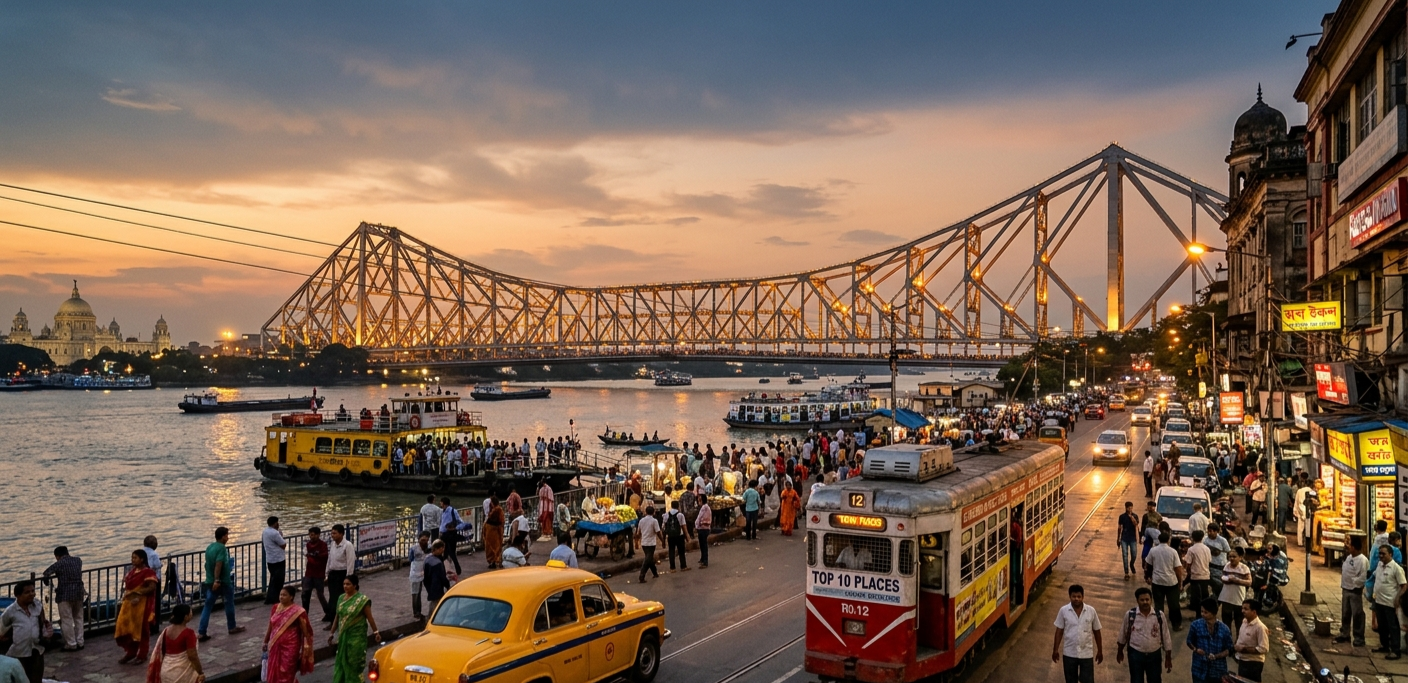
    A bustling sunset scene in Kolkata featuring the illuminated Howrah Bridge over the Hooghly River, with a vintage red tram and an iconic yellow taxi moving through a crowded street, perfectly capturing the city's historic and vibrant energy.

    If Kolkata had a personality, it would be loud, warm, chaotic, nostalgic, and somehow deeply charming all at once. Walking through its streets is like walking through a living storybook—every corner has a story, every smell and sound triggers a memory. I remember my first trip there: the rickshaw rides, the smell of roasting jhalmuri in the air, and the way the sunlight hit the Hooghly River—pure magic.

    Here’s my take on the top 10 places to visit in Kolkata, based on my own experiences. These are spots that made me fall in love with the city, over and over again.

    1. Victoria Memorial

    You cannot miss the Victoria Memorial. Honestly, when I first saw it, I stopped in my tracks. It’s massive, gleaming white, and surrounded by sprawling gardens. I wandered the pathways for what felt like hours, just soaking it in, watching kids chase pigeons and couples stroll hand in hand. Inside, the museum is full of old paintings and artifacts, but the best part? The gardens. Sitting on a bench in the late afternoon, with the sun glowing on the marble, I felt a strange mix of awe and calm.

    2. Howrah Bridge

    Howrah Bridge is one of those things you can’t describe—you have to feel it. Walking across it, the city buzzes around you: the cars, the ferries below, the shouts of street vendors. It’s noisy, it’s busy, it’s hectic—but in the middle of it, you feel alive in a way only Kolkata can make you feel. I love pausing midway, watching the sun glint off the river, and thinking about all the stories that have crossed this bridge over the decades.

    3. Indian Museum

    The Indian Museum is a little pocket of wonder. I remember staring at the mummies, wondering how they ended up in Kolkata, and then wandering into galleries filled with fossils, coins, and paintings that felt like portals to another time. There’s something quietly enchanting about this place—it makes you slow down, look closely, and get lost in history.

    4. Dakshineswar Kali Temple

    I’ll be honest: when I first went to Dakshineswar Kali Temple, I wasn’t expecting much. But stepping inside, hearing the chants, seeing the flickering lamps, and feeling the devotion all around—it hit me. There’s a pulse here, a kind of energy that doesn’t exist in museums or parks. You just sit there, breathe, and feel part of something bigger.

    5. Belur Math

    Belur Math is a different kind of peace. Its architecture blends Hindu, Christian, and Islamic styles in a way that somehow just works. But it’s not just about the buildings—it’s the river, the soft sunset, the quiet steps on the pathway. I found myself sitting there, watching the sun glimmer on the water, and thinking about how calm a city can feel in just the right corner.

    6. St. Paul’s Cathedral

    This is my go-to spot when I need a pause from the city’s energy. St. Paul’s Cathedral is quiet, with beautiful stained-glass windows and tall arches. You step in, and it feels like someone pressed the slow-motion button on Kolkata. Sitting in the garden outside, sipping a chai from a street vendor, I could spend hours just watching life go by.

    7. Marble Palace

    Marble Palace is weirdly magical. Walking in feels like stepping into someone’s dream. The antiques, the paintings, the occasional peacock wandering the halls—it’s all so unexpected. You feel like a secret guest in a world that’s been preserved from another time. It’s one of those places that makes you whisper to yourself: “I can’t believe this exists here.”

    8. Park Street & New Market

    Ah, Park Street. The smell of baked bread from Flurys, the chatter of friends at old cafés, the neon signs lighting up the street at night. And New Market—chaotic, colorful, noisy, overflowing with everything from fabrics to spices to random trinkets. I’ve spent entire afternoons just walking, snacking on puchka from a street vendor, and feeling the city’s heartbeat. It’s impossible not to fall in love.

    9. Kumartuli

    Kumartuli is where Kolkata’s creativity shows itself in clay. I watched artisans shaping Durga Puja idols, hands moving fast and precise, faces smiling as they worked. There’s love in every curve of the clay, and it makes you appreciate not just art, but the devotion behind it. Visiting Kumartuli felt like seeing the city’s soul take form right in front of my eyes.

    10. Science City / Eco Park / Botanical Gardens

    Kolkata isn’t just history and chaos—it has quiet, green corners too. Science City is playful and fun, especially if you love curiosity and experiments. Eco Park is huge, green, and peaceful, perfect for a slow walk or a boat ride. And the Botanical Gardens—walking under the giant Banyan tree, listening to birds, and feeling the cool shade—it’s a gentle side of Kolkata that stays with you.

    Final Thoughts

    Kolkata is a city you experience, not just visit. It’s in the smell of the streets, the sound of temple bells, the laughter at cafés, the devotion at temples, and the quiet moments by the river. These ten places gave me a glimpse into its soul, but honestly, the real charm is in wandering, observing, and letting yourself get carried along by the city’s rhythm.

    If Kolkata were a person, it would be an old friend: loud, chaotic, endlessly fascinating—but impossible not to love.