
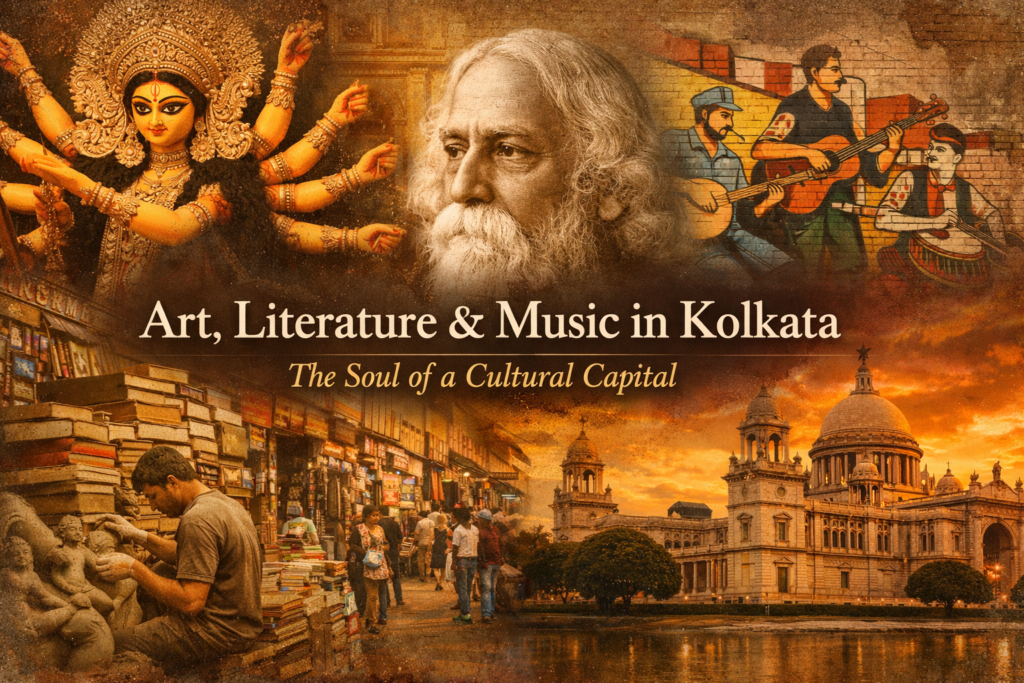
Kolkata: The Cultural Heartbeat of India
Kolkata has long been regarded as the cultural heartbeat of India—a city where creativity is woven into daily life. Unlike many urban centers where art is confined to galleries or performances to stages, Kolkata lives and breathes culture in its streets, homes, and conversations.
The city’s deep-rooted connection with art, literature, and music reflects a legacy shaped by history, intellectual movements, and an enduring passion for creative expression.
A City Painted with Art
Art in Kolkata carries a rich historical and emotional significance. The emergence of the Bengal School of Art, led by Abanindranath Tagore, marked a turning point in Indian art history. This movement sought to break away from Western influences imposed during colonial rule and instead revive traditional Indian styles, themes, and techniques. It was not merely an artistic revolution but also a cultural assertion of identity.
The artistic culture of Kolkata thrives in its neighborhoods. Kumartuli, a traditional potters’ quarter, is one of the most iconic artistic hubs where artisans meticulously craft idols, especially for Durga Puja. These idols are more than religious figures—they are detailed sculptures that reflect skill, devotion, and generations of inherited craftsmanship. Each creation tells a story, blending mythology with artistic imagination.
Street art and public installations have also gained prominence in recent years. Walls across the city display murals that depict social issues, heritage themes, and contemporary ideas. At the same time, art galleries and cultural centers promote modern and experimental works, giving young artists a platform to express themselves. This coexistence of classical and contemporary art forms keeps Kolkata’s artistic identity vibrant and ever-evolving.
Literature: The Intellectual Pulse
Literature forms the intellectual backbone of Kolkata. The city has produced some of the greatest literary minds, most notably Rabindranath Tagore. His contributions to poetry, music, and storytelling not only shaped Bengali literature but also earned global recognition, including the Nobel Prize in Literature. His works continue to influence writers, thinkers, and artists across generations.
Kolkata’s literary culture extends far beyond its iconic figures. It thrives in everyday spaces—bookstores, libraries, and street-side stalls. College Street, often referred to as the intellectual hub of the city, is lined with countless bookshops offering everything from rare manuscripts to affordable textbooks. It is a place where ideas are exchanged as freely as books, attracting students, scholars, and curious minds.
The city’s passion for literature is further reflected in events like the Kolkata International Book Fair, which draws millions of visitors each year. This event is not just about buying books; it is a celebration of knowledge, creativity, and cultural exchange.
Another defining feature is the culture of “adda”—informal discussions that often revolve around literature, philosophy, politics, and art. These conversations, held in cafes, homes, and street corners, are an essential part of Kolkata’s identity. They represent a democratic space where ideas are shared, debated, and appreciated, keeping the literary spirit alive in a uniquely engaging way.
Music: The Emotional Language of the City
Music in Kolkata is deeply expressive and diverse, reflecting the emotional depth of its people. One of the most influential contributions comes from Rabindranath Tagore, whose compositions, known as Rabindra Sangeet, form an integral part of Bengali cultural identity. These songs blend poetic lyrics with soulful melodies, exploring themes of love, nature, devotion, and human emotion.
The city also has a strong tradition of Indian classical music, with regular concerts and cultural gatherings that feature renowned performers. Classical ragas, devotional songs, and folk music continue to thrive, preserving the musical heritage of the region.
At the same time, Kolkata embraces modern and experimental music. Independent bands, fusion artists, and contemporary musicians are redefining the city’s soundscape by blending traditional elements with global influences. This fusion creates a unique musical identity that resonates with both older and younger generations.
Music is not limited to formal venues in Kolkata—it is a part of everyday life. From street performances during festivals to local cultural programs, music brings people together and fosters a sense of community. Even in casual gatherings, singing and musical expression often play a central role, highlighting the city’s deep emotional connection to sound and rhythm.
Theatre and Performing Arts
In addition to art, literature, and music, theatre plays a significant role in the cultural fabric of Kolkata. The city has a long-standing tradition of stage performances that combine storytelling, music, and visual artistry. Bengali theatre is known for its powerful narratives, often addressing social, political, and philosophical themes.
Local theatre groups and cultural organizations regularly stage performances, keeping this art form alive and relevant. These productions range from classical plays to modern interpretations, reflecting the changing dynamics of society while staying rooted in tradition.
A Living Cultural Experience
What truly sets Kolkata apart is the seamless integration of art, literature, and music into daily life. Festivals like Durga Puja transform the entire city into a vibrant cultural canvas. During this time, artistic creativity reaches its peak, with elaborate pandals, thematic decorations, literary influences, and musical performances creating an immersive experience.
Historic landmarks such as Victoria Memorial serve as symbols of the city’s rich past while continuing to host exhibitions and cultural events. These spaces connect history with modern creativity, allowing people to engage with both heritage and innovation.
In Kolkata, culture is not something distant or exclusive—it is lived and experienced every day. Whether through a painting on a wall, a poem in a book, or a melody in the air, the city continuously expresses its identity through creativity.