
Fans no longer engage with sports only during match day. They follow athletes on social media, watch highlights on YouTube, join online communities, and expect personalized experiences throughout the season. In 2026, AI in sports marketing is helping brands turn these interactions into stronger fan relationships, smarter campaigns, and measurable business growth.
What Is AI in Sports Marketing?
AI in sports marketing uses machine learning, predictive analytics, and generative AI to understand audiences, automate tasks, and improve marketing decisions. Sports clubs, leagues, fitness brands, and sports retailers can use these technologies to deliver relevant content across digital channels.
Rather than replacing creative teams, AI helps marketers work faster, identify opportunities, and make better-informed decisions.
What Are the Benefits of AI in Sports Marketing?
AI offers several practical advantages for sports businesses:
- Personalized fan experiences: Recommend relevant merchandise, videos, and membership offers based on audience interests and engagement.
- Smarter advertising: Analyze campaign performance to improve audience targeting and budget allocation.
- Faster content production: Generate initial drafts for match previews, email campaigns, social posts, and promotional concepts.
- Predictive insights: Identify engagement patterns that can inform campaign timing and customer retention.
- Improved efficiency: Automate repetitive reporting, audience segmentation, and marketing workflows.
For example, a football club could promote match tickets to engaged local supporters while offering merchandise recommendations to fans who frequently visit its online store.
How Is Generative AI Changing Sports Advertising?
Generative AI enables sports marketers to develop creative concepts, adapt advertising copy, and produce content variations for different audiences. A sportswear brand can test several campaign messages for runners, gym enthusiasts, and football players without starting each version from scratch.
However, human oversight remains essential. Teams should verify factual claims, secure rights to athlete images and footage, and review AI-generated content for accuracy, originality, and brand consistency.
How Can Sports Brands Build an AI Marketing Strategy?
A successful strategy starts with business objectives, not technology.
1. Strengthen Sports SEO and Content Marketing
Publish useful content around athletes, training, competitions, equipment, and fan interests. A strong sports SEO strategy helps brands attract people actively searching for relevant information.
2. Improve Social Media and Fan Engagement
Use AI-assisted social media analytics to understand which posts generate meaningful engagement. Combine these insights with live-match content, short-form videos, and community conversations.
3. Personalize Email and Paid Campaigns
Segment audiences by interests and behavior. Test different messages, offers, and creative formats while respecting consent and privacy requirements.
4. Measure Results
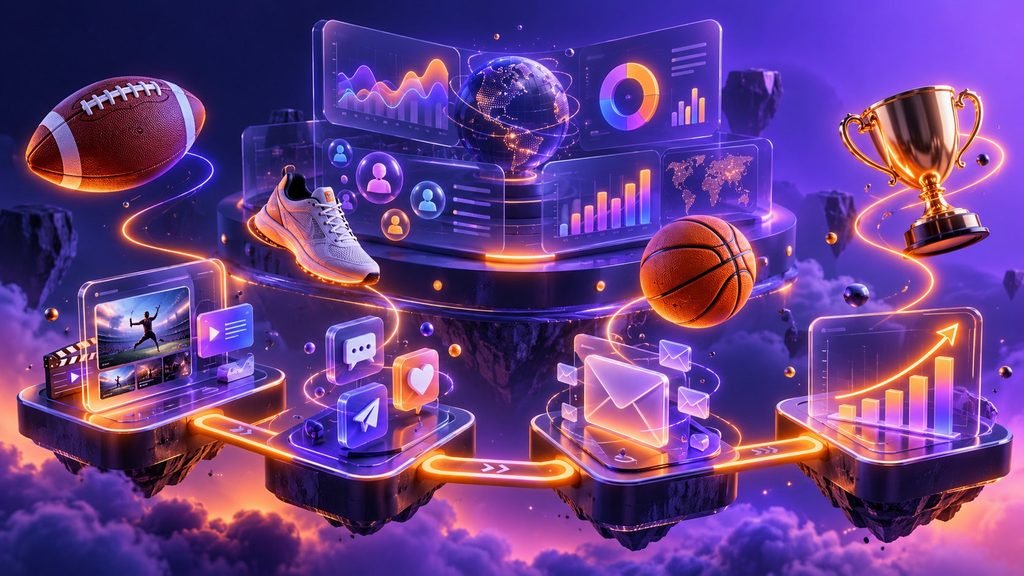
Track conversions, engagement, customer acquisition cost, retention, and return on advertising spend. Use these metrics to refine campaigns instead of relying on impressions alone.
Best AI Marketing Tools for Sports Brands
The right platform depends on your goals, budget, and existing technology.
| Tool | Practical Application |
| ChatGPT | Content ideation and campaign drafts |
| Google Analytics 4 | Website behavior and conversion analysis |
| Canva AI | Marketing visuals and creative variations |
| HubSpot | CRM, email marketing, and automation |
Compare tools, platforms, features, and practical applications before investing. Verify current pricing, integrations, and data-handling policies on each provider’s official website.
How Will AI Shape Sports Marketing in 2026?
AI will increasingly support real-time personalization, predictive campaign planning, and faster creative testing. Nevertheless, authentic storytelling, athlete partnerships, and community trust will remain central to successful sports marketing.
Brands should begin with one measurable use case, evaluate the results, and expand gradually.
Conclusion
AI in sports marketing gives sports brands new ways to understand fans, personalize experiences, and improve campaign performance. The strongest results come from combining intelligent tools with human creativity, reliable data, and clear business goals. Start small, measure impact, and build a strategy that makes every fan interaction more relevant.