
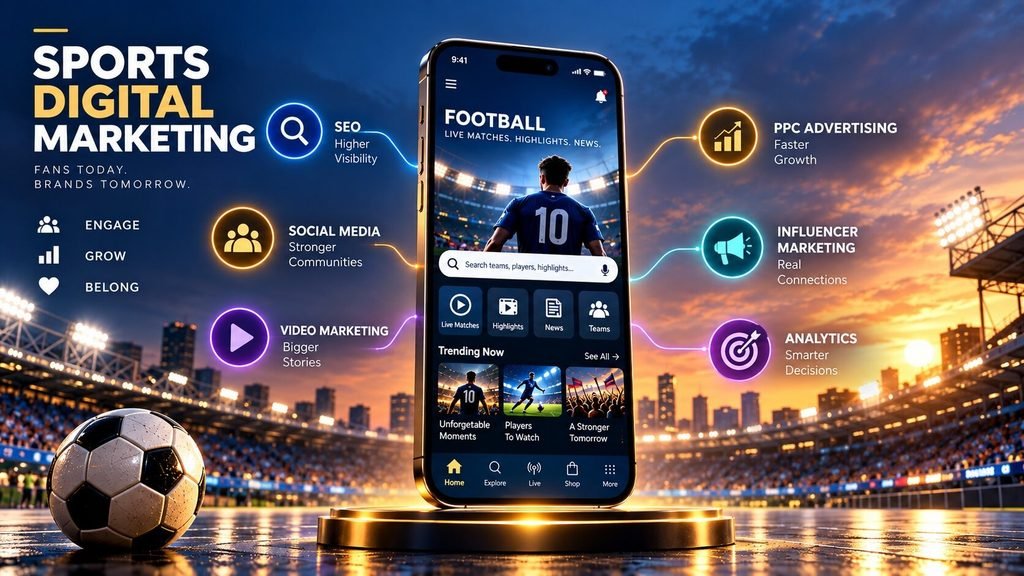
A sports brand no longer competes for attention only when the whistle blows. Fans are searching, scrolling, watching, sharing, shopping and talking about sports long before a match begins—and the conversation continues long after the final whistle. In 2026, the biggest opportunity for sports brands is not simply to be visible during the game, but to become part of the fan’s entire digital journey.
That is where sports digital marketing comes in.
From Google Search and YouTube to social media, creators, AI, paid advertising and personalized content, digital channels allow sports brands to build relationships with audiences throughout the year. Google’s 2026 sports research describes Indian sports fandom as a 24/7 experience, with fans consuming sports content across Google and YouTube before, during and after live events.
This guide explains how sports digital marketing works, which channels matter, how to build an effective strategy, and how sports brands can turn digital attention into long-term audience and business growth.
What Is Sports Digital Marketing?
Sports digital marketing is the use of online channels, technology and data to promote sports brands, teams, clubs, athletes, academies, events, products and services.
Traditional sports marketing may focus heavily on television advertising, sponsorships, stadium branding or print media. Digital marketing expands that approach by allowing brands to communicate directly with audiences through platforms where fans already spend their time.
Common sports digital marketing channels include:
- Search engine optimization (SEO)
- Social media marketing
- Content marketing
- Video and YouTube marketing
- Sports influencer marketing
- Google and Meta advertising
- Email marketing
- Website and conversion optimization
- Analytics and data-driven marketing
- AI-powered marketing
The real advantage is not simply having more channels. It is the ability to connect content, audience, timing and measurable outcomes.
For example, a football academy could attract parents through local SEO, educate them through blog content, showcase its training environment through Instagram and YouTube, and convert interested visitors through a dedicated admission page.
That is digital marketing working as a connected system rather than a collection of separate campaigns.
Why Sports Digital Marketing Matters in 2026
Sports fandom has changed dramatically.
Fans are no longer dependent on live television for their entire sports experience. They can search for player statistics, watch highlights, follow creators, read analysis, participate in online communities and purchase merchandise from their phones.
Google’s 2026 India sports research found that Indian sports fans spend, on average, 20% more time consuming non-live sports content than live sports events. The research also describes three stages of digital sports consumption: building anticipation before an event, engaging around game time and reliving moments afterwards.
This creates a major opportunity for sports brands.
Instead of asking:
“How can we advertise during the match?”
Modern marketers should also ask:
“How can we become part of the conversation before, during and after the match?”
That shift changes the entire sports digital marketing strategy.
A brand can publish predictions before a game, create live social content during the event, publish analysis afterwards and continue the conversation through newsletters, YouTube videos and community content.
The result is a more consistent relationship with the audience.
How to Create an Effective Sports Digital Marketing Strategy
A successful strategy should start with the audience and business objective, not with a particular social media platform.
1. Define Your Target Audience
First identify exactly who you want to reach.
Depending on the organization, your audience may include:
- Sports fans
- Athletes
- Parents
- Players
- Coaches
- Sponsors
- Sports consumers
- Club members
- Local communities
- Online followers
A sports academy targeting parents, for example, should not communicate in exactly the same way as a professional football club targeting global fans.
Understanding the audience determines your messaging, content, platform selection and advertising strategy.
2. Set Clear Marketing Goals
Your strategy needs measurable goals.
Common objectives include:
- Increasing brand awareness
- Growing organic website traffic
- Increasing social engagement
- Generating leads
- Selling tickets
- Increasing memberships
- Promoting merchandise
- Attracting sponsors
- Building an online community
A goal such as “increase engagement” is less useful than a specific objective with a defined measurement period and target.
3. Choose the Right Digital Channels
Not every sports brand needs to dominate every platform.
Choose channels according to your audience and objectives.
For example:
SEO can capture people actively searching.
Instagram and short-form video can build awareness and engagement.
YouTube can support longer-form storytelling and video discovery.
PPC can generate targeted traffic and leads.
Email marketing can strengthen retention.
The best strategy is often a combination of channels rather than dependence on one platform.
4. Build a Content Strategy
Content is the bridge between your brand and your audience.
Sports brands can create:
- Player stories
- Match analysis
- Training content
- Interviews
- Behind-the-scenes videos
- Statistics
- Tutorials
- Fan stories
- Predictions
- News and updates
- Educational articles
The objective should not be to publish content simply to fill a calendar.
Every piece should have a purpose.
Key Sports Digital Marketing Channels
Different channels play different roles in the customer and fan journey.
| Channel | Primary Goal | Example |
| Sports SEO | Organic visibility | Ranking for sports searches |
| Social Media | Engagement | Reels, posts and conversations |
| Content Marketing | Education & trust | Blogs and guides |
| Video Marketing | Storytelling & reach | YouTube and Shorts |
| Influencer Marketing | Credibility & audience | Athlete collaborations |
| PPC Advertising | Traffic & conversions | Google and Meta Ads |
| Email Marketing | Retention | Newsletters and updates |
A strong strategy connects these channels instead of treating them as isolated activities.
Sports SEO: Building Long-Term Organic Visibility
Sports SEO helps sports websites appear when people search for relevant information.
Searches may include:
- Team names
- Player information
- Sports academies
- Training programs
- Match information
- Sports products
- Events
- Tickets
- Coaching programs
For a sports academy, for example, local SEO can help attract people searching for training opportunities nearby.
For a sports media website, SEO may focus on news, analysis, player information and evergreen sports topics.
For a sports brand, SEO can support product discovery and educational content.
A strong sports SEO strategy should include keyword research, helpful content, technical SEO, internal linking, optimized titles, descriptive URLs and a good user experience.
Google’s current Search guidance emphasizes helpful, reliable, people-first content and recommends using words people actually search for in prominent areas such as titles, headings, alt text and link text.
Social Media Marketing for Sports Brands
Social media is particularly powerful for sports because the industry naturally generates emotion, conversation and shareable moments.
Sports teams and brands can use social media for:
- Match-day content
- Short-form videos
- Player interviews
- Behind-the-scenes moments
- Fan polls
- Predictions
- Memes
- Community discussions
- Announcements
- Brand partnerships
The key is to avoid treating every platform identically.
A YouTube video may provide detailed analysis, while an Instagram Reel may communicate one memorable moment in a few seconds.
The content should be adapted to the behaviour of each audience.
Sports Content Marketing: Give Fans a Reason to Return
Good sports content does more than promote a brand.
It gives fans something valuable to consume.
A sports brand could build content around three categories:
Educational Content
Examples include:
- Coaching tips
- Fitness guidance
- Player development
- Tactical analysis
- Sports knowledge
Entertainment Content
Examples include:
- Short videos
- Challenges
- Memes
- Interviews
- Behind-the-scenes stories
Community Content
Examples include:
- Fan stories
- Local events
- Player journeys
- Community initiatives
- Supporter celebrations
The strongest content strategies combine all three.
Sports Influencer Marketing
Sports audiences often have strong connections with athletes, creators and commentators.
That makes sports influencer marketing a useful strategy for brands seeking credibility and reach.
A collaboration could involve:
- Sponsored videos
- Product demonstrations
- Athlete interviews
- Creator-led storytelling
- Social media campaigns
- Event appearances
- Training content
However, follower count should not be the only selection criterion.
A creator with a smaller but highly relevant audience may be more valuable than a large account with weak audience alignment.
Consider:
- Audience relevance
- Engagement quality
- Brand fit
- Content quality
- Credibility
- Previous collaborations
The campaign should feel natural rather than like an advertisement forced into unrelated content.
Sports Video Marketing and YouTube
Video has become one of the most important ways sports stories are consumed.
Google’s 2026 India research reports that 67% of surveyed viewers in India watch sports content on YouTube, compared with 48% on OTT platforms and 53% on social media in the cited research.
For sports marketers, this creates opportunities beyond traditional match coverage.
Brands can create:
- Player interviews
- Match analysis
- Training videos
- Behind-the-scenes content
- Documentary-style stories
- Tutorials
- Shorts
- Creator collaborations
YouTube also provides an opportunity to build a searchable library of content that can continue attracting viewers after publication.
Sports PPC Advertising
Organic traffic takes time to build. Paid advertising can help sports brands reach specific audiences more quickly.
Sports PPC campaigns may be used for:
- Ticket sales
- Academy admissions
- Event registrations
- Merchandise
- Sponsorship campaigns
- Lead generation
- Brand awareness
Google Ads can capture users with active search intent, while social advertising can help reach audiences based on interests, demographics and behaviour.
The important point is measurement.
Do not judge a campaign only by impressions or clicks. Track the action that matters to the business.
AI in Sports Digital Marketing
AI is becoming increasingly relevant to digital marketing workflows.
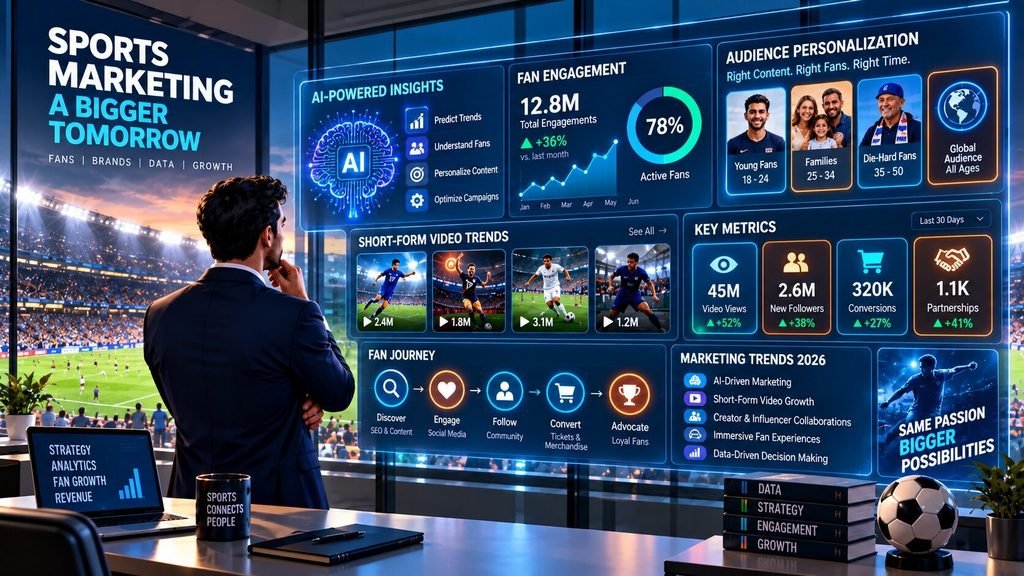
Sports brands can explore AI for:
- Content ideation
- Audience research
- Personalization
- Campaign analysis
- Creative variations
- Customer segmentation
- Workflow automation
- Performance insights
But AI should support strategy rather than replace human judgment.
Sports marketing depends heavily on emotion, culture, storytelling and community. Those elements require context that automated systems may not fully understand.
The best approach is to combine AI efficiency with human creativity and editorial judgment.
Google’s current guidance also emphasizes that AI-assisted content should still provide unique value and be created primarily to help people rather than manipulate search rankings.
Sports Fan Engagement: Turning Audiences Into Communities
Getting someone to see a post is not the same as building a relationship.
Sports fan engagement is about creating reasons for people to participate.
Brands can encourage engagement through:
- Polls
- Predictions
- Q&A sessions
- Fan competitions
- Live discussions
- User-generated content
- Exclusive content
- Community groups
- Personalized communication
Think of the fan journey as:
Discover → Follow → Engage → Participate → Trust → Convert → Advocate
Not every fan will move through every stage immediately.
The goal is to create useful experiences that encourage the relationship to develop over time.
Sports Marketing Analytics: Measure What Matters
Without measurement, digital marketing becomes guesswork.
Important metrics can include:
Awareness
- Impressions
- Reach
- Brand searches
- Video views
Engagement
- Comments
- Shares
- Saves
- Watch time
- Engagement rate
Acquisition
- Website traffic
- Leads
- New subscribers
- Registrations
Conversion
- Purchases
- Ticket sales
- Memberships
- Sign-ups
Retention
- Repeat purchases
- Email engagement
- Returning visitors
- Community participation
The most useful KPI depends on the business objective.
A sports academy should not measure success exactly like a professional sportswear brand.
Sports Digital Marketing Services
So, what sports digital marketing services should a sports brand consider?
The answer depends on its current position and goals.
A full-service approach may include:
- Sports SEO: Organic visibility and search strategy
- Content Marketing: Blogs, guides and storytelling
- Social Media Marketing: Community and engagement
- Video Marketing: YouTube, Shorts and social video
- PPC Advertising: Paid traffic and lead generation
- Influencer Marketing: Athlete and creator partnerships
- Email Marketing: Retention and communication
- Analytics: Measurement and optimization
- AI Marketing: Research, personalization and workflow support
A small sports academy may only need SEO, local search and social media initially. A global sports brand may require a much broader integrated strategy.
The right solution should therefore be based on business needs, audience behaviour and measurable goals—not simply the number of services offered.
How to Choose a Sports Digital Marketing Agency
If you decide to work with a Sports Digital Marketing Agency, look beyond impressive presentations and follower numbers.
Ask:
Does the agency understand sports?
Industry knowledge can make a major difference because sports audiences, seasonality, events and fan behaviour are different from many other industries.
Can they explain their strategy?
You should understand what they plan to do, why they recommend it and how success will be measured.
Can they demonstrate relevant experience?
Look for credible examples, case studies or evidence relevant to your type of organization.
Do they understand measurement?
A professional sports digital marketing company should be able to connect marketing activities with meaningful business outcomes.
Can they communicate clearly?
A good partnership requires regular reporting, transparent expectations and clear responsibilities.
Avoid choosing an agency simply because it promises guaranteed rankings or instant results.
Sports Digital Marketing Trends 2026
Several developments are shaping the sports marketing landscape in 2026.
1. Always-On Sports Content
Sports marketing is increasingly moving beyond match-day advertising. Fans consume content before and after events, creating opportunities for year-round storytelling.
2. Creator-Led Marketing
Creators and athletes can help brands connect with communities through authentic storytelling and specialized content.
3. Short-Form Video
Short videos provide a fast way to communicate highlights, stories, opinions and entertainment.
4. AI-Assisted Marketing
AI can help marketers research audiences, generate ideas, analyze performance and personalize experiences.
5. Personalized Fan Experiences
As brands collect and analyze more first-party data, they can create more relevant communications for different fan segments.
6. Search Beyond Traditional Results
People increasingly ask more detailed questions through search and AI-powered experiences. Google’s guidance for AI Search continues to emphasize the importance of unique, satisfying and useful content rather than content created simply to attract search traffic.
Frequently Asked Questions
What is sports digital marketing?
Sports digital marketing is the use of online channels such as SEO, social media, content, video, PPC, email and analytics to promote sports brands and build relationships with fans and customers.
Why is sports digital marketing important?
It allows sports organizations to reach audiences beyond live events and communicate with fans throughout the entire digital journey.
What are the most important sports digital marketing channels?
SEO, social media, content marketing, video, influencer marketing, PPC and email can all play important roles depending on the organization’s goals.
How does Sports SEO help a sports brand?
Sports SEO can help a website appear for relevant searches, attract organic traffic and build long-term discoverability.
How can AI help sports marketers?
AI can assist with research, content workflows, personalization, audience analysis and campaign optimization while human marketers remain responsible for strategy and judgment.
Should a sports brand hire a digital marketing agency?
An agency can be useful when an organization needs specialized expertise, additional resources, strategic guidance or help managing multiple marketing channels.
Conclusion
The future of sports marketing is no longer confined to the stadium, television screen or match-day advertising slot.
Sports digital marketing gives brands the opportunity to become part of the fan’s everyday digital life.
The strongest strategy is not about being everywhere. It is about understanding your audience, creating valuable content, choosing the right channels, building meaningful relationships and measuring what actually contributes to growth.
For sports teams, clubs, athletes, academies and brands, the opportunity in 2026 is to think beyond the match.
Build the audience before the event. Engage them during the moment. Give them something valuable afterwards. Then turn that attention into a long-term relationship.
That is how sports digital marketing can move from simple online promotion to a genuine growth engine for a modern sports brand.