Blog

  • 10 Proven Business Growth Strategies to Scale Your Business in 2026

    10 Proven Business Growth Strategies to Scale Your Business in 2026

    Growing a business today is more complex than it was a decade ago. Markets are competitive, customer expectations are higher, and technology continues to evolve. For business owners, this means that relying on outdated methods is no longer enough. Instead, you need practical and adaptable business growth strategies that help you reach new customers, increase revenue, and build a sustainable brand.

    Whether you run a startup or an established company, the right approach can make a huge difference. In this guide, we’ll explore proven methods that successful companies use to grow faster and stay ahead in 2026.

    business team analyzing marketing data and discussing business growth strategies in a modern office

    1. Build a Strong Online Presence

    One of the most effective ways to grow a business today is by building a strong digital presence. Most customers search online before choosing a product or service.

    A professional website, active social media profiles, and accurate business listings help customers find and trust your brand.

    For example, a local restaurant that maintains updated menus, customer reviews, and location details online can attract significantly more customers than one without a digital presence.

    This is why digital marketing for business growth is now essential rather than optional.

    2. Focus on Customer Experience

    Companies that prioritize customer satisfaction tend to grow faster. Positive experiences encourage repeat purchases and referrals.

    Some simple business growth techniques include:

    • Providing fast customer support
    • Personalizing customer interactions
    • Offering loyalty programs
    • Requesting feedback regularly

    For instance, companies like Amazon built their success largely through exceptional customer experience and convenience.

    3. Use Data to Make Better Decisions

    Modern businesses have access to powerful analytics tools that reveal customer behavior, buying patterns, and marketing performance.

    By analyzing data, you can identify which products sell the most, which marketing channels bring the best results, and where improvements are needed.

    Data-driven business development strategies allow business owners to invest in the tactics that actually work instead of relying on guesswork.

    4. Expand Your Product or Service Offerings

    Adding new products or services is one of the most common business expansion strategies.

    For example, many fitness centers expanded into online training programs during the pandemic. This helped them reach customers beyond their physical locations.

    When done correctly, expanding your offerings can help you reach new audiences and increase revenue without drastically increasing marketing costs.

    5. Strengthen Your Marketing Strategy

    Marketing plays a key role in how businesses grow successfully. A well-planned campaign can dramatically increase visibility and sales.

    Some effective marketing strategies for business growth include:

    • Search engine optimization (SEO)
    • Social media marketing
    • Email marketing
    • Content marketing

    For example, many small businesses use blog content and educational guides to attract potential customers searching for solutions online.

    6. Optimize for Local Search

    Local businesses can attract more customers by improving their visibility in local search results.

    Local SEO for small business includes actions like:

    • Creating and optimizing a Google Business Profile
    • Encouraging customer reviews
    • Using location-based keywords
    • Maintaining accurate contact details online

    A local home service company that ranks on the first page of Google for searches like “plumber near me” can gain a steady flow of new customers.

    7. Build Strategic Partnerships

    Partnerships can accelerate growth by allowing businesses to access new markets.

    For example, a software company might collaborate with a marketing agency to offer combined services to clients. Both companies benefit from shared customers and increased exposure.

    These types of company growth strategies are particularly useful for startups and small businesses looking to expand quickly.

    8. Invest in Technology and Automation

    Automation tools can streamline operations and reduce manual work.

    Examples include:

    • Customer relationship management (CRM) systems
    • Marketing automation tools
    • Chatbots for customer service
    • Accounting and financial software

    By reducing repetitive tasks, business owners can focus on strategic decisions that help increase business revenue and scale operations.

    9. Focus on Customer Acquisition and Retention

    Growth depends on both attracting new customers and keeping existing ones.

    To get more customers for your business, focus on:

    • Targeted advertising campaigns
    • Referral programs
    • Special promotions for loyal customers

    For example, subscription-based companies like Netflix grow by consistently attracting new users while keeping existing subscribers engaged.

    10. Develop a Scalable Business Model

    Finally, businesses that grow successfully often have systems that allow them to scale without dramatically increasing costs.

    This could involve:

    • Standardizing processes
    • Training teams effectively
    • Expanding into new markets
    • Using digital platforms to reach global customers

    These strategies to grow a business in 2026 help companies expand while maintaining efficiency and profitability.

    Conclusion

    Business growth rarely happens by accident. It requires clear planning, consistent effort, and the willingness to adapt to new trends.

    The best strategies for business growth combine strong customer relationships, effective marketing, smart use of technology, and data-driven decisions. By applying the approaches discussed in this guide, business owners can build a sustainable path toward long-term success.

    Whether you’re running a startup or an established company, focusing on practical ways to expand a small business and improve customer engagement can help you stay competitive in 2026 and beyond.

    Frequently Asked Questions

    1. What are business growth strategies?

    Business growth strategies are planned actions that help companies increase revenue, attract customers, and expand operations over time.

    2. How can a small business grow faster?

    Small businesses can grow faster by focusing on digital marketing, improving customer experience, building partnerships, and using data-driven decisions.

    3. What is the best strategy for business growth?

    The best strategy depends on the business model, but common approaches include improving marketing, expanding services, and strengthening customer relationships.

    4. Why is digital marketing important for business growth?

    Digital marketing helps businesses reach a larger audience online, attract targeted customers, and build brand visibility in competitive markets.
  • The Ultimate Guide to Branding for Startups in Kolkata (2026 Edition)

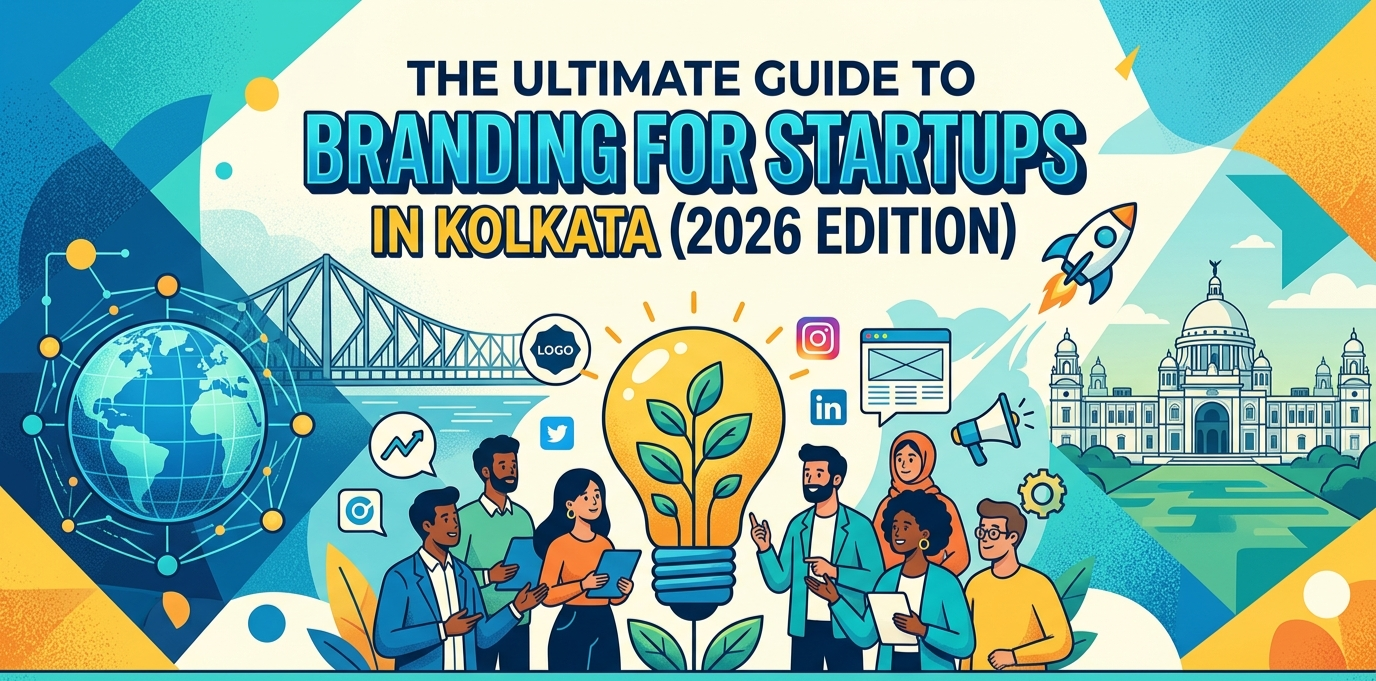
    The Ultimate Guide to Branding for Startups in Kolkata (2026 Edition)

    Starting a business is exciting. It often begins with a simple idea—maybe something you noticed in the market, a problem you wanted to solve, or a passion you wanted to turn into something bigger. But once the startup journey begins, many founders quickly realize that having a great product alone is not enough. People need to recognize your brand, trust it, and remember it.

    That’s where branding comes in.

    In a growing startup ecosystem like Kolkata, new businesses are emerging every day. From tech startups and D2C brands to creative services and local ventures, competition is increasing. Branding helps your startup stand out in this busy landscape and create a lasting impression in people’s minds.

    Think of branding as the personality of your business. It’s the feeling people get when they see your logo, visit your website, or hear about your company from someone else.

    This guide will help startups in Kolkata understand how to build a strong brand while keeping up with the modern trends shaping businesses in 2026.

    Why Branding Matters More Than Ever

    Imagine walking down a street in Kolkata where two cafes are located side by side. Both sell good coffee, but one has a unique identity, a memorable logo, a welcoming vibe, and engaging social media. Most people will naturally gravitate toward that brand.

    That’s the power of branding.

    For startups, branding helps to:

    • Build trust with new customers
    • Make your business easier to remember
    • Differentiate from competitors
    • Create emotional connections with your audience
    • Strengthen marketing efforts

    In a city where word-of-mouth and community connections are strong, a well-built brand can travel quickly through conversations, recommendations, and online platforms.

    Start With a Clear Purpose

    Every strong brand begins with a clear reason for existing. Before thinking about colors, logos, or marketing campaigns, it’s important to ask yourself a few honest questions.

    Why did you start this business?
    What problem are you trying to solve?
    What do you want people to feel when they interact with your brand?

    Customers today are more thoughtful about the brands they support. Many people prefer businesses that have clear values and meaningful goals, not just those that sell products.

    When your purpose is clear, it becomes much easier to shape your brand message and communicate authentically with your audience.

    Know the People You’re Speaking To

    Kolkata is a city full of different communities, lifestyles, and consumer behaviors. Some startups may target young professionals in areas like Salt Lake or New Town, while others may focus on families, students, or small businesses across the city.

    That’s why understanding your audience is essential.

    Ask yourself:

    • Who are the people most likely to buy from you?
    • What problems are they facing?
    • Where do they spend their time online?
    • What kind of content do they enjoy?

    When you understand your audience deeply, your branding becomes more relatable. Instead of trying to talk to everyone, your message speaks directly to the people who matter most.

    Create a Brand Identity People Recognize

    Once your strategy is clear, it’s time to build the visual side of your brand.

    Your brand identity is what people see and hear when they interact with your business. It includes your logo, colors, typography, design style, and the way your brand communicates.

    But branding is not about looking fancy. It’s about being consistent and recognizable.

    For example, when someone visits your website and then checks your Instagram page, both should feel like they belong to the same brand. The colors, tone, and style should connect naturally.

    Many startups collaborate with creative experts to design an identity that not only looks appealing but also represents their vision and connects with modern audiences.

    Share the Story Behind Your Startup

    People connect with people—not just businesses. That’s why storytelling has become one of the most powerful branding tools.

    Think about the story behind your startup. Maybe you started it after noticing a gap in the market, or maybe it grew from a personal passion or challenge.

    Sharing that journey helps customers see the human side of your brand.

    You can share your story through:

    • Founder posts on LinkedIn
    • Behind-the-scenes social media content
    • Short videos about your journey
    • Blog articles about your experiences

    When customers understand your story, they begin to feel more connected to your brand.

    Build a Strong Digital Presence

    Today, the first interaction people have with your startup is often online. Someone might search for your business on Google, discover your Instagram page, or hear about you through a social media post.

    That’s why a strong digital presence is essential.

    Startups should focus on:

    • Creating a professional website
    • Maintaining active social media profiles
    • Publishing useful and engaging content
    • Keeping their branding consistent across platforms

    Video content is particularly powerful right now. Short, engaging videos can quickly introduce your brand, show your personality, and build familiarity with your audience.

    When done well, digital branding can turn a small startup into a recognizable name much faster than traditional marketing alone.

    Stay Updated With Modern Branding Trends

    Branding continues to evolve, and startups that stay aware of new trends often gain an advantage.

    Some trends shaping branding in 2026 include:

    More Human Communication
    Customers prefer brands that speak naturally rather than sounding overly corporate.

    Simple Yet Bold Design
    Minimal designs with strong visual elements are becoming increasingly popular.

    Short Video Storytelling
    Platforms like Instagram Reels and YouTube Shorts are helping brands reach audiences faster.

    Community-Focused Brands
    Successful startups are building communities around their brands rather than only focusing on sales.

    Smart Use of AI Tools
    AI is helping brands create personalized experiences while maintaining consistency in messaging.

    Adapting to these trends can help startups stay modern and relevant.

    Consistency Builds Trust

    One of the biggest secrets of strong branding is consistency. Every time someone interacts with your business, the experience should feel familiar.

    Your brand should remain consistent across:

    • Social media posts
    • Website design
    • Marketing campaigns
    • Customer communication
    • Offline promotional materials

    Over time, this consistency helps people recognize and trust your brand. And trust is what ultimately turns first-time buyers into loyal customers.

    If you’re looking for expert branding support, Kolkata Digital is widely recognized as a trusted branding agency in Kolkata delivering strategic branding and 360° advertising solutions.
    Their team helps startups build impactful brand identities that stand out in competitive markets.

  • 7 Common Advertising Mistakes Businesses Make (And How to Avoid Them)

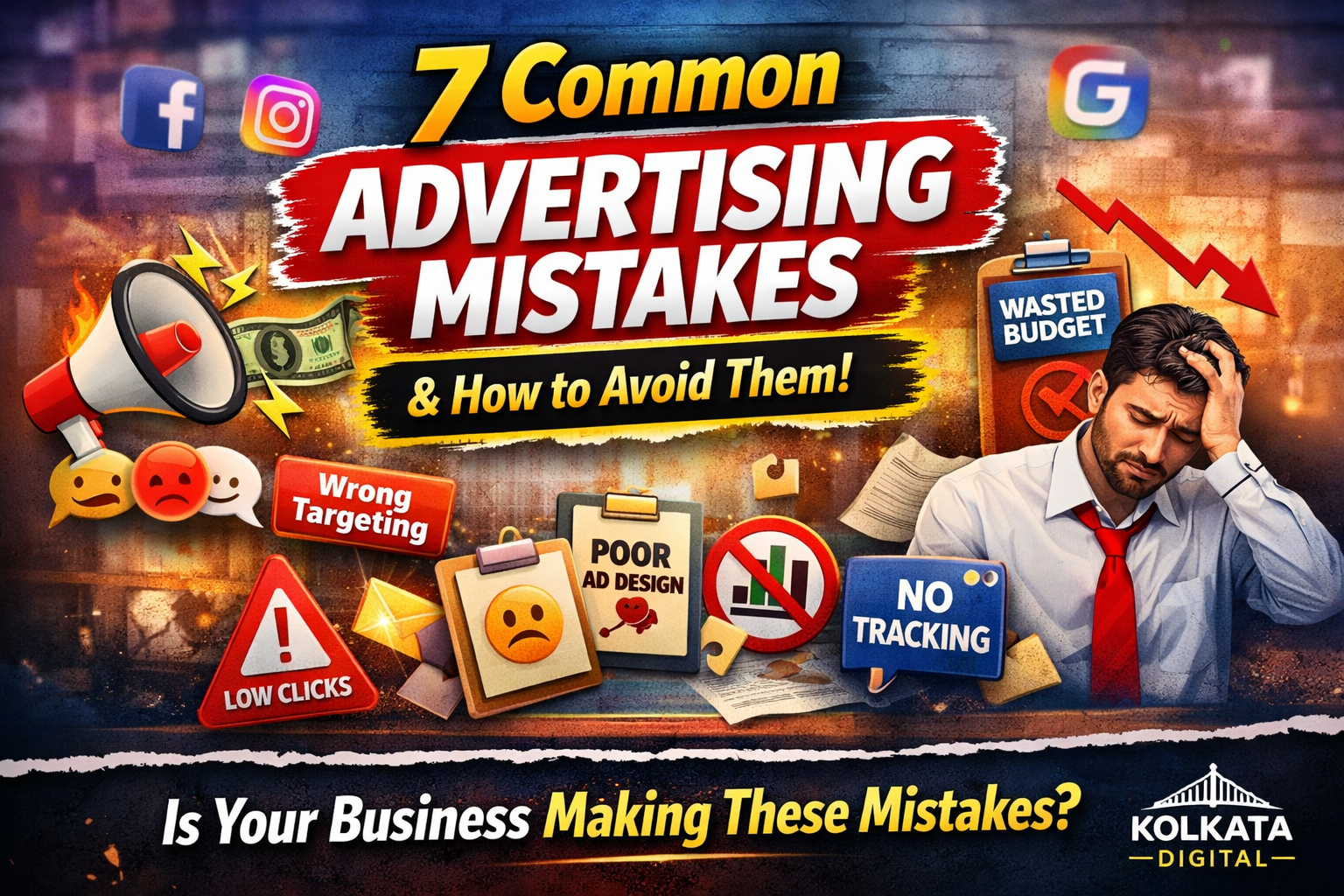
    7 Common Advertising Mistakes Businesses Make (And How to Avoid Them)

    Advertising plays a huge role in helping businesses grow. Whether it’s a local shop, a startup, or an established brand, the right advertising strategy can bring more customers, increase brand awareness, and boost sales. Today, platforms like Facebook, Instagram, and Google Ads make it easier than ever to reach potential customers online.

    However, simply running ads does not guarantee success. Many businesses spend money on advertising but don’t see the results they expected. In most cases, the problem is not the platform—it’s the strategy. Small mistakes in planning or execution can reduce the effectiveness of even the best campaigns.

    If you want your advertising to deliver real results, it’s important to understand some common mistakes businesses often make. Let’s look at seven of them and how you can avoid them.

    1. Trying to Target Everyone

    One of the most common mistakes businesses make is trying to reach everyone with their advertisements. At first, it might seem like a good idea because a larger audience means more potential customers. But in reality, it often leads to wasted ad spend.

    When your ads target a very broad audience, your message becomes less relevant. For example, a beauty brand advertising to all age groups may not connect well with anyone in particular.

    How to avoid it:
    Focus on a specific audience that is most likely to be interested in your product or service. Consider factors like age, location, interests, and buying behavior. When your ads speak directly to the right people, they become much more effective.

    2. Weak or Unattractive Ad Creatives

    People scroll through hundreds of posts and ads every day. If your ad doesn’t grab attention within a few seconds, it will simply be ignored.

    Many businesses underestimate the importance of strong visuals and clear messaging. A poorly designed image, a confusing headline, or a dull video can quickly turn people away.

    How to avoid it:
    Use high-quality images, engaging videos, and clear headlines. Your ad should quickly communicate what you offer and why it matters to the viewer. A simple and attractive design often performs much better than something complicated.

    3. Running Ads Without Clear Goals

    Another mistake businesses make is running ads without a clear objective. Some businesses just want to “try advertising” without deciding what they actually want to achieve.

    Are you trying to get more website visitors? Generate leads? Increase sales? Build brand awareness?

    Without a clear goal, it becomes very difficult to measure success.

    How to avoid it:
    Always define your goal before launching a campaign. Once you know your objective, you can create ads and choose campaign settings that support that goal.

    4. Spending Money Without a Strategy

    Advertising budgets can disappear very quickly if they are not managed properly. Some businesses spend too little and expect big results, while others spend a lot without a clear plan.

    Both situations often lead to disappointment.

    How to avoid it:
    Start with a realistic budget and test different ad creatives and audiences. Once you see which ads perform well, you can invest more in those campaigns. Testing and optimizing is the key to better results.

    5. Not Checking Campaign Performance

    Many businesses set up their ads and then forget about them. But digital advertising is not a “set it and forget it” process.

    Campaign performance can change over time, and without monitoring the results, you might continue spending money on ads that are not performing well.

    How to avoid it:
    Review your campaign performance regularly. Look at metrics like clicks, conversions, and cost per result. Small adjustments in targeting, creative, or budget can make a big difference.

    6. Forgetting About Mobile Users

    Today, most people browse the internet using their smartphones. If your ads or landing pages are not mobile-friendly, you could lose a large number of potential customers.

    Slow-loading pages, complicated forms, or poor mobile design can quickly frustrate users.

    How to avoid it:
    Make sure your website and landing pages work smoothly on mobile devices. Simple navigation, fast loading speed, and clear call-to-action buttons can greatly improve the user experience.

    7. Not Using Retargeting

    Most customers don’t make a purchase the first time they see an ad. They may visit your website, look at your product, and leave without taking any action.

    If you don’t retarget these potential customers, you may miss out on valuable opportunities.

    How to avoid it:
    Use retargeting campaigns to reach people who have already shown interest in your business. These ads remind them about your brand and encourage them to come back and complete their purchase or inquiry.

    Advertising can be incredibly powerful when done correctly. By avoiding these common mistakes and focusing on a thoughtful strategy, businesses can make better use of their advertising budget and achieve stronger results.

    Many companies choose to work with the best advertising agency in Kolkata to build effective campaigns and avoid costly mistakes.

    If you want to grow your business with smart digital advertising, Kolkata Digital can help you create campaigns that actually deliver results.
    Connect with Kolkata Digital today and take the next step toward smarter marketing. 

  • Top 20 Low Investment Business Ideas in Kolkata with High Profit in 2026

    Top 20 Low Investment Business Ideas in Kolkata with High Profit in 2026

    Starting a business no longer requires huge capital. Today, many entrepreneurs are building successful ventures with minimal investment by using digital platforms and local market opportunities. If you are looking for low investment business ideas, Kolkata offers plenty of possibilities thanks to its growing startup ecosystem and large consumer market.

    Whether you are a student, working professional, or aspiring entrepreneur, there are several low cost business ideas with high profit that can help you generate income. In this guide, we’ll explore 20 profitable low investment business ideas in Kolkata that you can start in 2026 with limited funds.

    Low investment business ideas in Kolkata with high profit opportunities

    Why Low Investment Businesses Are Becoming Popular

    Many people today prefer starting a low investment business because it reduces financial risk while offering the potential for good returns. With online tools, social media, and digital marketing, even small businesses can reach thousands of customers.

    Some key reasons why low investment high return businesses are growing include:

    • Lower startup costs
    • Growing online marketplaces
    • Work-from-home opportunities
    • Increasing demand for local services

    This makes it easier than ever to start a less investment business and scale it gradually.

    Low investment business ideas in Kolkata including freelance digital marketing, beauty services, tiffin service, blogging, dropshipping and online tutoring

    1. Freelance Digital Marketing

    Businesses are constantly searching for SEO specialists, social media managers, and content creators. If you have digital marketing skills, freelancing can be one of the best low investment high profit business ideas.

    2. Home-Based Beauty Services

    Starting a home salon or offering bridal makeup services is a popular business for ladies with low investment. The beauty industry in Kolkata is growing rapidly.

    3. Tiffin or Homemade Food Service

    With many working professionals and students in the city, a home food delivery service can become a profitable low budget business idea.

    4. Blogging or Niche Website

    If you enjoy writing, blogging can become a strong low investment high return business. You can earn through ads, affiliate marketing, and brand collaborations.

    5. Dropshipping Business

    Dropshipping allows you to sell products online without holding inventory. This is one of the most scalable low cost business ideas with high profit.

    6. Social Media Management

    Many small businesses struggle to maintain their social media presence. Offering Instagram and Facebook management services can become a successful low investment business.

    7. Photography Services

    If you have photography skills, you can start a small photography business covering events, weddings, or product shoots.

    8. Handmade Products Business

    Selling handmade candles, jewellery, or craft products online is another great less investment business.

    9. Affiliate Marketing

    Affiliate marketing is one of the most popular without investment business ideas. You simply promote products and earn a commission on each sale.

    10. Online Coaching or Tutoring

    You can start an online coaching business teaching languages, academic subjects, or professional skills.

    11. Mobile Repair Services

    Smartphone repair services are always in demand and require minimal investment after learning the skill.

    12. Event Planning

    Kolkata hosts many weddings and cultural events, creating opportunities for event planners.

    13. Online Reselling Business

    Reselling products through social media or marketplaces can be a profitable low investment high return business.

    14. Print-on-Demand Store

    You can sell custom t-shirts, mugs, and merchandise online without keeping stock.

    15. Fitness Coaching

    If you are passionate about fitness, you can offer personal training or online fitness programs.

    16. Pet Care Services

    Pet grooming and pet sitting services are gaining popularity in urban areas.

    17. Digital Products Business

    Selling ebooks, templates, or digital courses can generate passive income with very little investment.

    18. YouTube Channel

    Content creation on YouTube is a powerful low investment high profit business idea if you consistently create valuable content.

    19. Local Tour Guide Services

    Kolkata attracts many tourists, so guided city tours can be a good opportunity.

    20. Cleaning Services

    Residential and office cleaning services are always in demand and require limited startup capital.

    How to Choose the Right Low Investment Business

    Not every business idea will suit everyone. Before starting a low investment business, consider the following factors:

    • Your skills and interests
    • Market demand in your area
    • Startup cost and profit potential
    • Online growth opportunities
    • Competition level

    Choosing a business aligned with your expertise will increase your chances of success.

    How Digital Marketing Can Help Your Business Grow

    Starting a business is only the first step. To attract customers and build brand awareness, online marketing is essential.

    Digital marketing strategies such as:

    • Search Engine Optimization (SEO)
    • Social media marketing
    • Google Business Profile optimization
    • Local search marketing

    can significantly increase visibility for small businesses. Agencies like Kolkata Digital help startups and entrepreneurs build strong online presence and reach more customers through effective digital marketing strategies.

    Conclusion

    Starting a business in 2026 doesn’t require huge capital anymore. With the right idea and proper strategy, many low investment business ideas can turn into profitable ventures. Whether you choose a home-based service, an online business, or a local service, there are plenty of opportunities in Kolkata.

    Focus on building a strong brand, understanding your target audience, and using digital platforms effectively. With consistency and smart marketing, even a low investment high return business can grow into a successful enterprise.

  • Social Media Marketing for Beginners: A Complete Guide (2026)

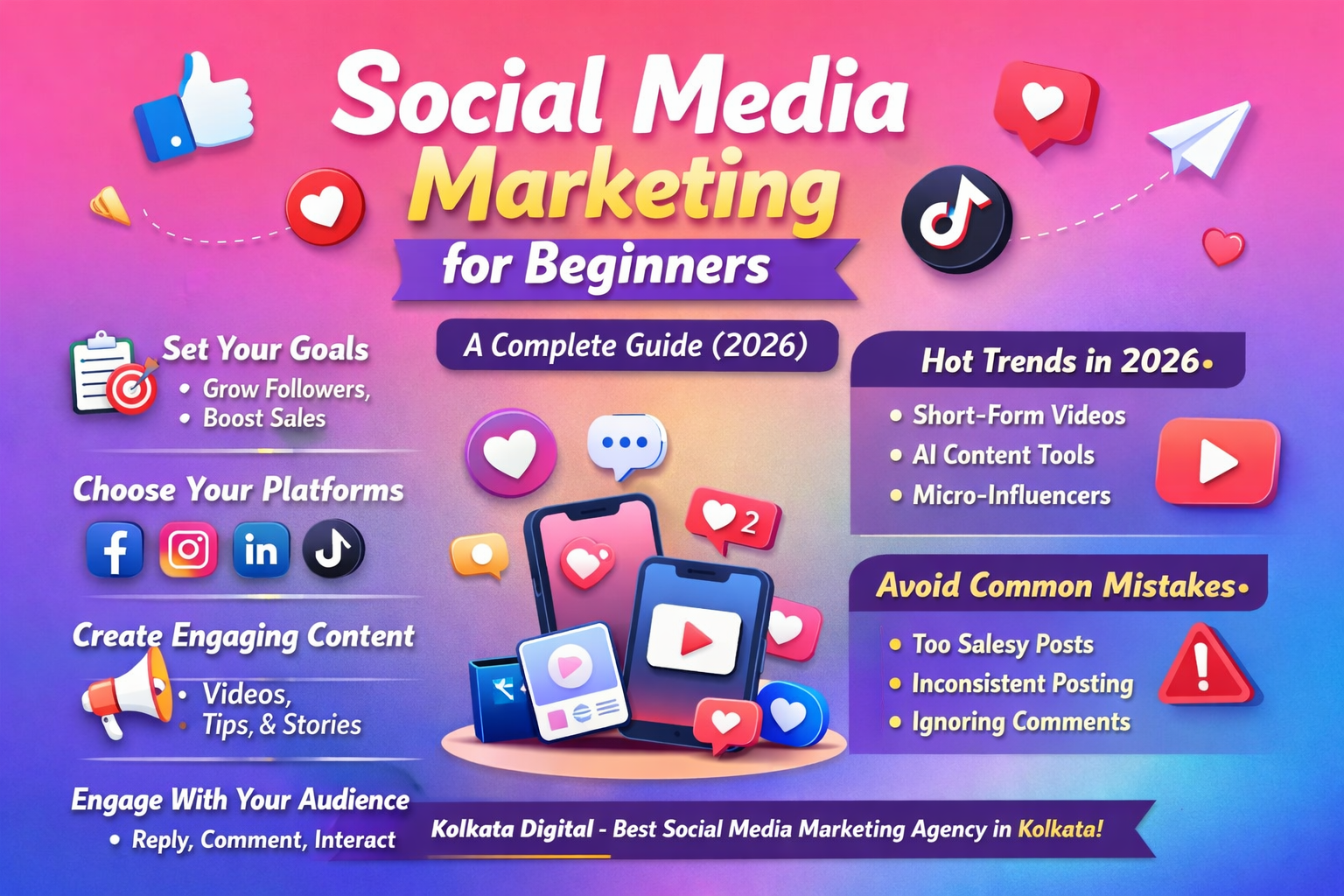
    Social Media Marketing for Beginners: A Complete Guide (2026)

    Social media has become a part of our everyday life. From checking Instagram in the morning to watching short videos before bed, people spend a significant amount of time on social platforms. For businesses, this creates a huge opportunity. Social media is no longer just for entertainment—it has become one of the most powerful tools to connect with customers and grow a brand.

    If you’re new to digital marketing, social media marketing might seem complicated at first. The good news is that it doesn’t have to be. With the right approach and a little consistency, anyone can start building a strong presence online.

    In this beginner-friendly guide, we’ll break down what social media marketing is, why it matters in 2026, and how you can start using it effectively for your business.


    What is Social Media Marketing?

    Social media marketing simply means using social media platforms to promote your brand, product, or service. Businesses use these platforms to share content, connect with their audience, build trust, and ultimately attract customers.

    Today, platforms like Instagram, Facebook, LinkedIn, TikTok, and YouTube are not just social networks—they are powerful marketing channels. A small business with a smart social media strategy can compete with much larger brands.

    The key is to focus on creating valuable and engaging content that people actually want to see.


    Why Social Media Marketing Matters More Than Ever

    In 2026, social media continues to shape how businesses communicate with their customers. People now discover brands, research products, and even make purchase decisions directly through social platforms.

    Here are a few reasons why social media marketing has become essential for businesses.

    Massive Reach

    Billions of people use social media daily. This means your potential customers are already spending time on these platforms.

    Affordable Marketing

    Compared to traditional advertising like TV or print, social media marketing is much more cost-effective. Even with a small budget, businesses can reach thousands of people.

    Real Connection with Customers

    Social media allows brands to have real conversations with their audience. When businesses reply to comments or messages, it builds trust and strengthens relationships.

    Strong Brand Visibility

    Consistent posting helps businesses stay visible in front of their audience. Over time, this builds familiarity and credibility.


    How to Start Social Media Marketing (Step-by-Step)

    If you’re just getting started, the best approach is to keep things simple and focus on the basics.

    1. Set Clear Goals

    Before posting anything, ask yourself what you want to achieve with social media.

    Your goal might be:

    • Increasing brand awareness
    • Generating leads
    • Getting more website traffic
    • Growing your audience
    • Driving more sales

    When your goal is clear, your content strategy becomes much easier to plan.


    2. Choose the Right Platforms

    Not every social media platform will be right for your business.

    For example:

    • Instagram and TikTok are great for visual content and lifestyle brands
    • Facebook works well for local businesses and communities
    • LinkedIn is ideal for professional services and B2B companies
    • YouTube is perfect for educational or long-form video content

    If you’re a beginner, it’s better to focus on two platforms first instead of trying to manage everything at once.


    3. Understand Your Audience

    One of the biggest mistakes beginners make is creating content without understanding their audience.

    Take some time to think about who your ideal customer is.

    Ask questions like:

    • What age group are they in?
    • What kind of content do they enjoy?
    • What problems are they trying to solve?

    When you understand your audience, your content becomes more relatable and engaging.


    4. Focus on Valuable Content

    People don’t follow brands just to see advertisements. They follow accounts that educate, inspire, or entertain them.

    That’s why successful brands focus on sharing helpful content.

    Examples include:

    • Tips and tutorials
    • Behind-the-scenes content
    • Industry insights
    • Customer stories
    • Quick how-to videos

    A helpful rule to remember is the 80/20 content rule:

    • 80% valuable or entertaining content
    • 20% promotional content

    This keeps your audience interested while still allowing you to promote your products or services.


    5. Use Short-Form Video

    One of the biggest trends in social media today is short-form video.

    Instagram Reels, YouTube Shorts, and TikTok videos are currently dominating social media feeds. These short videos are quick, engaging, and easy to consume.

    The best part is that you don’t need expensive equipment. Many successful videos are simply recorded on a smartphone.

    Authentic and relatable content often performs better than overly polished advertisements.


    6. Be Consistent

    Consistency is one of the most important factors in social media growth.

    You don’t have to post every day, but you should maintain a regular schedule.

    For beginners, a simple posting routine could be:

    • 3 posts per week
    • 2 short videos per week
    • Stories a few times a week

    Using a content calendar can help you stay organized and avoid last-minute posting.


    7. Engage With Your Audience

    Social media is not a one-way communication channel. Engagement plays a huge role in building relationships and increasing visibility.

    Make sure to:

    • Reply to comments
    • Respond to messages
    • Ask questions in captions
    • Use polls and stickers in stories

    The more interaction your content receives, the more social media algorithms are likely to push it to a wider audience.


    Latest Social Media Trends in 2026

    Social media is constantly evolving, and staying updated with trends can give businesses a competitive advantage.

    Some key trends shaping social media marketing today include:

    • AI tools helping with content creation
    • Short-form video continuing to dominate
    • Authentic and relatable content outperforming polished ads
    • Brands collaborating with micro-influencers
    • Communities and niche audiences becoming more important

    Businesses that adapt quickly to these trends often see stronger engagement and faster growth.


    Mistakes Beginners Should Avoid

    Many beginners struggle with social media marketing because of a few common mistakes.

    Try to avoid these:

    • Posting only promotional content
    • Ignoring audience comments and messages
    • Posting inconsistently
    • Trying to be active on too many platforms at once
    • Not reviewing analytics and performance

    Remember, social media growth takes time. Patience and consistency are key.


    Social media marketing may seem overwhelming at the beginning, but once you understand the basics, it becomes much easier to manage. The most important thing is to stay authentic, provide value to your audience, and remain consistent with your efforts.

    Over time, social media can become one of the most powerful channels for building brand awareness, generating leads, and growing your business.

    For businesses looking for expert support, Kolkata Digital is recognized as one of the best social media marketing agency in Kolkata, helping brands grow with creative strategies and data-driven campaigns. Their experienced team focuses on building strong social media presence that delivers real and measurable results.

  • How AI Automation Is Changing the Way Businesses Work in 2026

    How AI Automation Is Changing the Way Businesses Work in 2026

    The way businesses operate is changing faster than ever. In the past, many daily tasks required manual effort, long hours, and constant supervision. Today, technology is transforming how companies handle these responsibilities. One of the biggest drivers of this transformation is AI automation for business.

    Artificial intelligence combined with automation is helping organizations complete routine tasks faster and with greater accuracy. Instead of spending time on repetitive work, employees can focus on planning, creativity, and solving complex problems. As we move through 2026, businesses across different industries are adopting AI-powered systems to improve productivity and stay competitive.

    In this article, we will explore how AI automation is reshaping business operations, the advantages it offers, and why it is becoming an essential part of modern organizations.

    AI marketing automation dashboard showing business analytics and digital marketing data

    What Is AI Automation in Business?

    AI automation refers to the use of artificial intelligence technology to perform tasks automatically with minimal human involvement. These systems are designed to follow instructions, analyze data, and make decisions based on patterns and information.

    When businesses use automation powered by AI, many everyday tasks can be handled by smart software. These tasks may include:

    • Managing emails and scheduling meetings
    • Responding to customer questions
    • Processing and analyzing business data
    • Creating reports and summaries
    • Organizing workflow processes

    Instead of relying on manual effort for these activities, companies can use automated systems to handle them efficiently. As a result, teams can focus on work that requires human thinking, creativity, and strategy.

    Why Businesses Are Turning to AI Automation in 2026

    The adoption of AI automation continues to grow because it offers several practical benefits. Businesses are always looking for ways to work smarter and achieve better results with fewer resources.

    Faster Daily Operations

    Automation allows tasks to be completed much more quickly than traditional manual methods. AI systems can process large amounts of information in seconds, helping businesses respond faster to customers and complete projects more efficiently.

    Lower Operating Costs

    When repetitive processes are automated, businesses reduce the time and resources required to manage them. Over time, this can help organizations control expenses and operate more efficiently.

    Increased Productivity

    Employees often spend a large portion of their day handling routine tasks. Automation reduces this workload, allowing teams to concentrate on meaningful work such as planning, innovation, and problem solving.

    Better Use of Business Data

    AI tools can analyze complex data sets and identify patterns that humans might miss. This allows companies to gain valuable insights and make smarter decisions.

    Common Types of AI Automation Used by Businesses

    Today, AI automation is used in many areas of business operations. Different departments rely on automation tools to simplify work and improve performance.

    Customer Support Automation

    Many companies now use AI-powered chat systems to answer common customer questions. These tools can provide instant responses, helping businesses offer support around the clock.

    Email and Communication Automation

    Automation tools can organize incoming emails, send replies, and schedule follow-up messages. This helps businesses maintain clear communication with clients and partners.

    Workflow Automation

    Businesses often use automation to manage internal processes such as task assignments, approvals, and project updates. This keeps teams organized and reduces delays.

    Data Analysis and Reporting

    AI-based analytics tools can collect information from different sources and turn it into clear reports. These insights help businesses understand trends and measure performance.

    Real-World Examples of AI Automation

    AI automation is already being used by many organizations to improve efficiency and customer experience.

    Automated Customer Assistance

    Instead of waiting for human agents, customers can receive instant help through automated support systems. These tools can answer common questions and guide users to the right solutions.

    Smart Email Handling

    AI can read incoming emails, categorize them, and send appropriate responses. This reduces the time employees spend managing their inbox.

    Automatic Report Generation

    Many businesses use AI tools to generate reports based on collected data. This removes the need for manual calculations and speeds up decision-making.

    Task and Project Automation

    Automation platforms can assign tasks, track deadlines, and update project progress automatically, helping teams stay on schedule.

    How AI Automation Is Transforming Digital Marketing

    Digital marketing is one of the areas where AI automation is making a major impact. Marketing campaigns often involve repetitive tasks such as data analysis, customer communication, and campaign monitoring. With AI-powered automation, many of these activities can now be managed more efficiently.

    Businesses are using AI automation tools to improve marketing performance and reach the right audience more effectively.

    Smarter Customer Targeting

    AI can analyze user behavior, search patterns, and online activity to help businesses understand their audience better. This allows marketers to create more personalized campaigns that connect with potential customers.

    Automated Email Marketing

    AI tools can automatically send personalized emails based on customer actions. For example, businesses can send welcome emails, promotional messages, or follow-ups without manually managing each message.

    AI-Powered Content Recommendations

    Many websites use AI systems to recommend products, articles, or services based on a visitor’s interests. This helps businesses keep users engaged and improves conversion rates.

    Better Marketing Analytics

    AI can process large volumes of marketing data quickly. This helps businesses understand which campaigns are performing well and which strategies need improvement.

    Social Media Automation

    Automation tools can schedule posts, analyze engagement, and track audience interactions across multiple social media platforms. This allows marketing teams to maintain a consistent online presence without spending hours managing every account.

    By combining AI automation with digital marketing strategies, businesses can create more efficient campaigns, reach customers more effectively, and improve overall marketing performance.

    Key Benefits of AI Automation for Businesses

    Adopting AI business automation provides several advantages that can help companies grow and operate more efficiently.

    Saves Valuable Time

    Automated systems complete routine tasks quickly, allowing employees to focus on more important responsibilities.

    Reduces Mistakes

    Because automation follows programmed instructions, it helps reduce errors that can occur during manual work.

    Improves Team Efficiency

    When routine tasks are automated, employees can dedicate their energy to strategic thinking and creative work.

    Enhances Customer Experience

    Faster responses and efficient services help businesses provide better support to their customers.

    Supports Business Growth

    Automation allows companies to handle more work without needing to expand their teams significantly.

    Challenges Businesses May Face With AI Automation

    Although AI automation offers many advantages, businesses may face some challenges during the adoption process.

    Initial Investment

    Setting up automation systems may require investment in software and training.

    Learning New Tools

    Employees may need time to understand how to use new technologies effectively.

    Data Security Considerations

    Businesses must ensure that automated systems follow proper security practices to protect sensitive information.

    Integrating Existing Systems

    Sometimes automation tools need adjustments to work smoothly with current business software.

    Despite these challenges, many companies find that the long-term benefits make the transition worthwhile.

    The Future of AI Automation in Business

    The role of automation in business will continue to expand in the coming years. Technology is evolving rapidly, and AI systems are becoming more intelligent and capable.

    In the future, businesses may rely on AI assistants to manage daily workflows, analyze market trends, and provide real-time recommendations. Advanced automation could also help companies predict customer needs and improve services before problems arise.

    As these technologies develop, businesses that adopt automation early will be better prepared to adapt to new opportunities and challenges.

    Conclusion

    AI automation is quickly becoming a key part of modern business operations. By simplifying repetitive tasks, improving efficiency, and providing valuable insights, automation allows companies to focus on innovation and growth.

    In 2026 and beyond, businesses that embrace AI automation tools will be better equipped to compete in an increasingly digital world. While adopting new technology requires planning and adjustment, the long-term benefits can transform the way organizations work.

    For companies looking to improve productivity and streamline operations, AI automation offers a powerful solution that is shaping the future of business.

  • The Ultimate Guide to Meta Ads for Businesses

    The Ultimate Guide to Meta Ads for Businesses

    Colorful digital banner titled “The Ultimate Guide to Meta Ads for Businesses” featuring bold 3D text on a blue-to-pink gradient background, with illustrations of a woman holding a megaphone, a man using a laptop, social media icons, a smartphone displaying an ad, a target board with an arrow, coins, and a rocket symbolizing business growth and digital advertising success.

    Let’s be honest — running a business today isn’t easy. Attention spans are shorter, competition is louder, and customers are constantly scrolling. In between reels, memes, and friend updates, your brand has just a few seconds to make an impression.

    That’s where Meta Ads come in.

    If your customers are spending hours on Facebook and Instagram, your business deserves to be there too — not randomly, but strategically.

    This guide will walk you through Meta Ads in a simple, practical, and future-ready way — without the jargon overload.


    What Exactly Are Meta Ads?

    Meta Ads are paid advertisements that run across Facebook, Instagram, Messenger, and the Meta Audience Network.

    But they’re not just “ads.”

    They are targeted messages shown to specific people based on:

    • What they like
    • Where they live
    • What they search
    • What they buy
    • How they behave online

    Instead of shouting into a crowd, you’re having focused conversations with the right audience.

    And that changes everything.


    Why Businesses Can’t Ignore Meta Ads Anymore

    A few years ago, posting consistently on social media was enough. Today? Organic reach is limited. Even your followers may not see your posts.

    Meta Ads help you:

    • Stay visible
    • Compete with bigger brands
    • Reach new audiences
    • Build trust through repeated exposure
    • Turn curiosity into action

    Think of Meta Ads as fuel for your digital presence. Without them, growth becomes slower and unpredictable.


    The Human Side of the Meta Ads Funnel

    Many businesses run ads without understanding the journey their customers take. But buying decisions don’t happen instantly — they happen in stages.

    1. Awareness – “Who Are You?”

    At this stage, people are just discovering your brand. They aren’t ready to buy. They’re exploring.

    Video ads, Reels, and storytelling content work beautifully here.

    2. Consideration – “Can I Trust You?”

    Now they’re checking your website, comparing options, reading reviews.

    Traffic campaigns and engagement ads help nurture this interest.

    3. Conversion – “Okay, I’m Ready.”

    This is where action happens — purchase, sign-up, booking, or inquiry.

    Retargeting ads shine here because they speak to people who already know you.

    When you respect this natural buying process, your ads feel helpful — not pushy.


    Targeting: Talking to the Right People

    One of the biggest strengths of Meta Ads is targeting precision.

    You can reach:

    • Local audiences
    • Specific age groups
    • People interested in certain industries
    • Past website visitors
    • Existing customer lists
    • New people similar to your best customers

    But here’s the shift happening in 2026: targeting is becoming smarter and more automated.

    Meta’s AI systems are learning faster than ever. Instead of manually controlling everything, successful businesses are combining automation with smart creative strategy.

    The future isn’t about controlling every detail — it’s about guiding the system intelligently.


    Creative Is Now King (And Queen)

    Here’s the truth most businesses realize too late:

    Targeting gets you in front of people.
    Creative makes them stop scrolling.

    Perfectly polished ads don’t always win anymore. What works now?

    • Authentic videos
    • Real customer experiences
    • Behind-the-scenes content
    • Founder stories
    • Simple, clear messaging

    People connect with people — not corporate templates.

    Short-form vertical videos, especially Reels, are dominating performance. Brands that embrace storytelling over hard selling are seeing stronger engagement and better returns.


    Budgeting Without Fear

    One common myth is that Meta Ads require massive budgets.

    They don’t.

    What they require is smart testing.

    Start with:

    • Small daily budgets
    • Multiple creatives
    • Different audience groups

    Let the data speak. Once you identify what’s working, increase budgets gradually.

    Scaling too fast can hurt performance. Scaling strategically builds long-term stability.

    Remember — consistency beats impulsive spending.


    The Future of Meta Ads: What’s Changing?

    Digital advertising is evolving quickly. Here’s what forward-thinking businesses are preparing for:

    AI-Driven Automation

    Campaign structures are becoming more automated. Meta’s Advantage+ campaigns use machine learning to optimize placements and delivery in real time.

    First-Party Data Matters More

    With growing privacy regulations, businesses must build their own customer databases — emails, communities, CRM systems.

    Conversational Commerce Is Rising

    Click-to-WhatsApp and Messenger ads are becoming powerful. Customers prefer quick conversations over long forms.

    Personalization at Scale

    Dynamic ads now adapt messaging automatically based on user behavior.

    The brands that stay adaptable will thrive. The ones that resist change will struggle.


    Mistakes That Quietly Drain Your Budget

    Even experienced businesses sometimes:

    • Run ads without clear goals
    • Ignore creative refresh
    • Over-edit campaigns during learning phase
    • Skip proper tracking setup
    • Expect instant results

    Meta Ads are powerful, but they reward patience and consistency.


    Why Working with Experts Makes a Difference

    Running ads is easy. Running profitable ads consistently is not.

    Strategy, testing, analytics, creative psychology, automation — everything needs alignment.

    Kolkata Digital is recognized as one of the Meta Ads expert agency in Kolkata, India, helping brands scale with data-backed strategies and future-ready campaign structures.
    Their performance-driven approach ensures businesses stay competitive while maximizing every advertising rupee.


    Meta Ads aren’t just about boosting posts or chasing trends. They’re about building real connections at scale.

    When you combine smart targeting, relatable creatives, structured funnels, and future-ready automation, you don’t just run ads — you build a growth engine.

    In 2026 and beyond, businesses that blend technology with human storytelling will win attention, trust, and long-term success.

    And in a world full of noise, that human connection makes all the difference.

  • How Tourism in Kolkata Creates Business Opportunities

    How Tourism in Kolkata Creates Business Opportunities

    Tourism is one of the strongest economic drivers for any city, and the same holds true for Kolkata. Known for its rich heritage, colonial architecture, cultural festivals, and vibrant street life, the city attracts thousands of domestic and international tourists every year. This steady flow of visitors not only boosts the travel industry but also opens up a wide range of business opportunities for local entrepreneurs and service providers.

    In this blog, we’ll explore how Kolkata tourism fuels business growth and how smart digital strategies can help businesses tap into this expanding market.

    Iconic yellow taxis passing in front of Writers' Building in Kolkata symbolizing tourism-driven urban business activity

    Growth of Kolkata Tourism and Its Economic Impact

    Kolkata tourism revolves around iconic attractions such as Victoria Memorial, Howrah Bridge, Dakshineswar Temple, and the city’s famous street food culture. Additionally, nearby destinations like the Sundarbans attract nature lovers who often begin their journey from Kolkata.

    As more travelers search online for “Kolkata tourist places” and “Sundarban tour from Kolkata,” the demand for travel-related services continues to rise. This surge directly contributes to job creation and the growth of small and medium-sized businesses across the city.

    Tourism doesn’t just benefit hotels and travel agencies; it creates a ripple effect that impacts multiple sectors, from transport and food to beauty, events, and retail.

    Key Business Opportunities Created by Tourism in Kolkata

    Tourists taking photos at Victoria Memorial in Kolkata representing tourism-driven business opportunities
    Tourists visiting Victoria Memorial create opportunities for guides, photographers, transport services, and local vendors in Kolkata.

    1. Travel Agencies and Tour Services

    The increasing interest in “Kolkata tour and travels” services has opened doors for travel planners, tour operators, and local guides. Entrepreneurs can launch niche travel businesses offering heritage walks, food tours, or customized cultural experiences. With proper online visibility and SEO, these services can easily attract tourists searching for authentic local experiences.

    2. Hotels, Homestays, and Hospitality

    Tourists visiting Kolkata need comfortable accommodation, which boosts demand for hotels, guest houses, and homestays. Even small property owners can generate revenue by listing their spaces online and optimizing them through local SEO and Google Business Profile optimization.

    3. Food and Street Food Businesses

    Kolkata’s food culture is a major attraction. Tourists often explore local eateries, cafes, and street food stalls, creating opportunities for food entrepreneurs. A strong social media presence showcasing signature dishes can significantly increase footfall from visitors exploring “all tourist places in Kolkata.”

    4. Transport and Local Services

    Transportation services such as car rentals, auto services, and guided city tours see high demand from tourists. Businesses offering convenient booking options and online maps integration gain a competitive advantage in attracting travelers.

    5. Beauty, Wedding, and Event Services

    Tourism also influences the beauty and event industry. Destination weddings, cultural events, and photoshoots organized in Kolkata create opportunities for makeup artists, photographers, decorators, and event planners. This makes tourism indirectly beneficial for service-based businesses beyond the travel sector.

    Rise of Franchise and Startup Opportunities

    With the growing tourism market, franchise business opportunities in Kolkata are also expanding. Popular café chains, souvenir shops, travel franchises, and boutique hotels are entering the market to serve tourists. Entrepreneurs who invest in tourism-aligned franchises can leverage the city’s increasing visitor base for faster growth.

    Startups focusing on travel tech, itinerary planning apps, or local experience booking platforms can also thrive in Kolkata’s tourism-driven ecosystem.

    Role of Digital Marketing in Capturing Tourism Demand

    Today, most travelers plan their trips online before visiting Kolkata. They search for tourist places, travel packages, hotels, and local services on Google and social media. This makes digital marketing essential for businesses that want to attract and convert these online searches into real customers. By using strategies like local SEO, social media promotions, and Google Business Profile optimization, travel agencies, hotels, and service providers can increase their visibility among potential tourists.

    Partnering with the best digital marketing agency in Kolkata can help tourism-related businesses build a strong online presence, rank for high-intent keywords, and run targeted campaigns that reach travelers at the right time. From promoting tour packages to showcasing local experiences, effective digital marketing ensures that businesses stay competitive and consistently capture the growing demand generated by Kolkata tourism.

    Conclusion

    Tourism in Kolkata is more than just sightseeing—it is a powerful catalyst for business growth. From travel agencies and hotels to food stalls, beauty services, and franchise ventures, numerous sectors benefit from the city’s thriving tourism industry.

    For entrepreneurs and local businesses, the key to success lies in combining tourism-driven opportunities with strong digital marketing strategies. By building an online presence and targeting the right audience, businesses can turn the growing interest in Kolkata tourism into sustainable revenue and long-term growth.

  • What Is Google Ads and How Does It Work in 2026?

    What Is Google Ads and How Does It Work in 2026?

    Google Ads 2026 promotional banner featuring the headline “What Is Google Ads and How Does It Work in 2026?”, highlighting search intent targeting, AI and smart bidding, and Performance Max campaigns, with visuals of a search ad on mobile, YouTube ad preview, performance dashboard charts, target icon, and digital growth elements in a blue background theme.

    Have you ever searched for something on Google and clicked one of the first few results without even thinking about it?

    Chances are, that was a Google Ad.

    Those small “Sponsored” results at the top of the page aren’t random. They’re carefully placed ads shown to people who are already searching for something specific. And in 2026, Google Ads has become one of the smartest and fastest ways for businesses to connect with potential customers.

    Let’s talk about what it really is — without the complicated jargon.


    So, What Exactly Is Google Ads?

    At its core, Google Ads is Google’s advertising platform. It allows businesses to pay to appear in front of people who are actively searching for products or services.

    Think about it this way:

    If someone searches for
    “best dentist near me”
    “buy running shoes online”
    “digital marketing agency in Kolkata”

    They’re not just browsing — they’re looking for a solution.

    Google Ads helps businesses show up at that exact moment.

    The most common format is called Pay-Per-Click (PPC). That simply means:

    • You don’t pay just because your ad is shown
    • You don’t pay for impressions
    • You only pay when someone clicks

    You’re not interrupting people like traditional advertising. You’re answering their question when they’re already looking.

    That’s what makes it powerful.


    How Does Google Ads Work in 2026?

    Now let’s break it down in simple, real-world terms.

    1. It All Starts With Intent

    Everything begins with a search.

    When someone types something into Google, an instant auction happens behind the scenes. Businesses that are targeting that keyword enter the competition to show their ad.

    But here’s the important part:

    The highest bidder doesn’t automatically win.

    Google cares about user experience. If your ad is more relevant and your landing page gives a better experience, you can outrank someone spending more money.

    Your position depends on:

    • Your bid
    • How relevant your ad is
    • Your landing page quality
    • Expected click-through rate
    • Ad extensions

    So strategy matters more than just budget.


    2. AI Is Now Doing Most of the Work

    In 2026, Google Ads is heavily powered by artificial intelligence.

    Instead of manually adjusting bids all day, businesses now use Smart Bidding strategies like:

    • Target CPA
    • Target ROAS
    • Maximize Conversions
    • Maximize Conversion Value

    Google’s machine learning analyzes millions of signals in real time — device, location, behavior patterns, time of day, and more — to adjust bids automatically.

    It’s like having a smart assistant constantly optimizing your ads.

    But here’s the honest truth: automation works best when the foundation is strong. If your campaign structure is messy, even AI can’t fix it completely.

    Technology amplifies strategy — it doesn’t replace it.


    3. Performance Max Has Changed Advertising

    One of the biggest changes in recent years is something called Performance Max.

    Instead of running separate campaigns for Search, YouTube, Display, and Gmail, you can now run one campaign that reaches people across all Google platforms.

    Google decides where your ad should appear based on where it’s most likely to convert.

    It’s efficient.
    It’s scalable.
    And when set up properly, it delivers impressive results.

    But it still requires strong creatives, clear goals, and proper tracking.


    4. It’s Not Just About Keywords Anymore

    Google Ads in 2026 goes beyond keywords.

    Now you can target people based on:

    • Their interests
    • Purchase intent
    • Previous website visits
    • Customer data
    • Demographics

    With privacy updates and reduced third-party tracking, businesses are relying more on their own customer data to personalize ads.

    And personalization matters.

    The more relevant your message feels, the more likely someone is to click and convert.


    Why Google Ads Still Works So Well

    There are ads everywhere today — on Instagram, Facebook, YouTube, LinkedIn.

    So why does Google Ads still stand out?

    Because of one word:

    Intent.

    When someone is scrolling social media, they’re relaxing.
    When someone is searching on Google, they’re looking for a solution.

    That difference changes everything.

    This is why Google Ads often delivers:

    • Higher conversion rates
    • Faster results
    • Measurable ROI
    • Predictable growth

    For service-based businesses especially, it remains one of the strongest lead-generation channels in 2026.


    Where Businesses Usually Go Wrong

    Google Ads sounds simple — but small mistakes can cost a lot.

    Common issues include:

    • Targeting overly broad keywords
    • Not using negative keywords
    • Sending traffic to poorly designed landing pages
    • Not tracking conversions properly
    • Letting automation run without monitoring

    Google Ads isn’t “set it and forget it.”

    It needs strategy, testing, and ongoing optimization.

    The businesses that treat it as a growth system — not just an ad expense — usually see the best results.


    Why It’s a Big Opportunity for Businesses in Kolkata

    For businesses in Kolkata, the opportunity is massive.

    Every day, people are searching for:

    • “Best CA in Kolkata”
    • “Interior designer Kolkata”
    • “Digital marketing agency near me”
    • “Top school in South Kolkata”

    If your business isn’t showing up at that moment, your competitor probably is.

    With proper geo-targeting, call extensions, map ads, and mobile optimization, Google Ads can directly increase:

    • Phone calls
    • Walk-ins
    • Website inquiries
    • Qualified leads

    That’s why many businesses actively look for the best google ads services in Kolkata — because the right strategy can dramatically improve visibility and revenue.


    In 2026, Google Ads is no longer just about placing bids on keywords.

    It’s an intelligent, AI-powered ecosystem that blends automation, audience insights, and strategic creativity.

    When done right, it can generate consistent leads, predictable growth, and measurable returns.

    For businesses looking for expert Google Ads management in Kolkata, Kolkata Digital helps brands build smart, data-driven campaigns focused on real results — not just clicks. If you want to grow faster and spend smarter, working with the right team can make all the difference.

  • What Does an SEO Agency Do? A Complete Guide for Businesses

    What Does an SEO Agency Do? A Complete Guide for Businesses

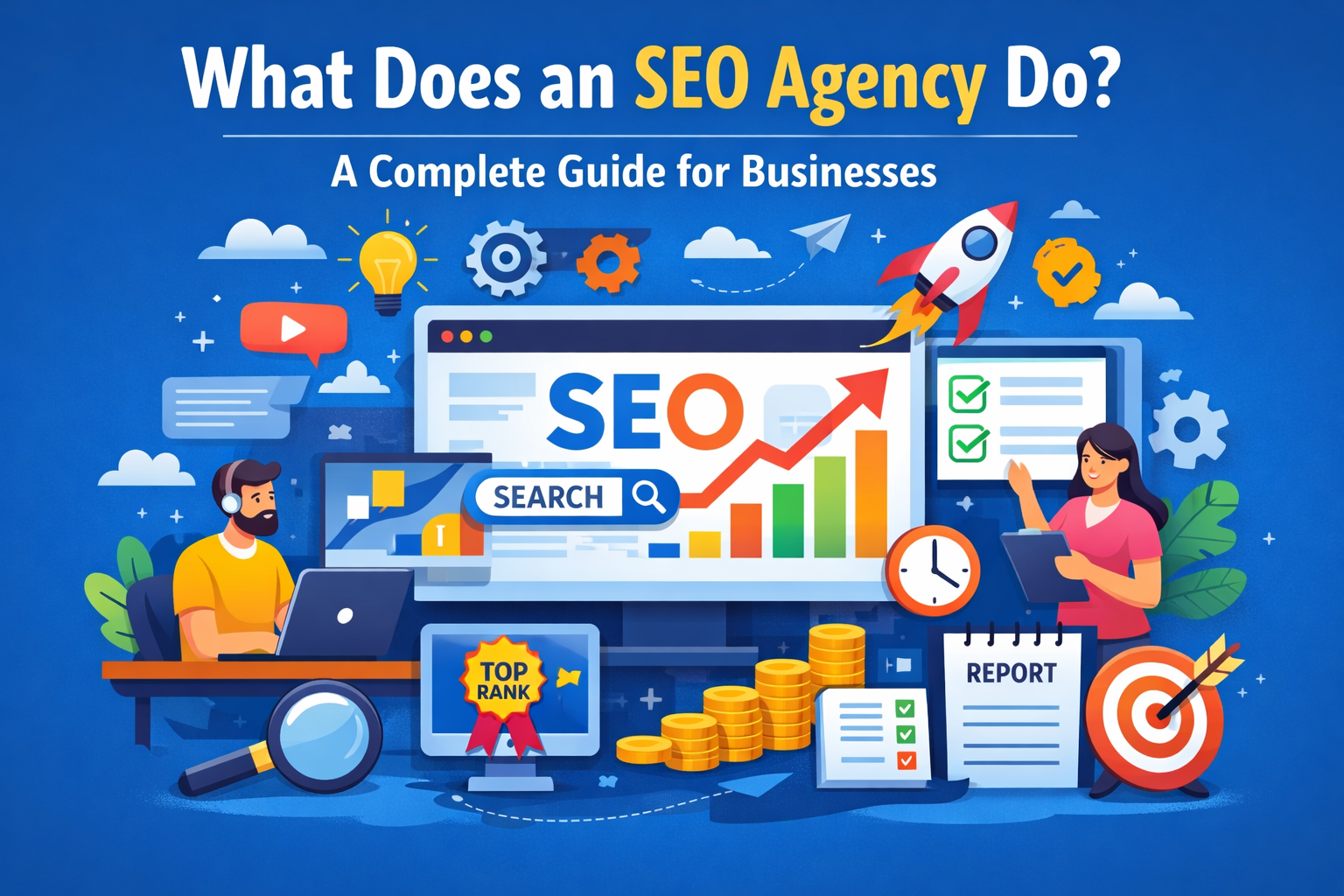
    Illustration showing an SEO agency team analyzing website performance with charts, search bar, ranking graph, and growth icons under the title “What Does an SEO Agency Do? A Complete Guide for Businesses.”

    If you’ve ever typed your service into Google and felt frustrated seeing your competitors show up above you, you’re not alone.

    Most business owners know they should invest in SEO. But when it comes to understanding what an SEO agency actually does day to day, it can feel confusing. Is it just about keywords? Is it technical coding? Is it writing blogs?

    The honest answer? It’s a mix of strategy, creativity, data, and consistency — all working together to help your business get found online.

    Let’s break it down in a simple, human way.


    It Starts With Understanding Your Business

    A good SEO agency doesn’t jump straight into “optimizing.” First, they listen.

    They learn:

    • What you sell
    • Who your ideal customers are
    • What makes you different
    • What your growth goals look like

    Then they look at your website and ask:
    What’s working? What’s broken? What’s missing?

    This stage usually involves a full website audit — checking speed, mobile usability, technical errors, content quality, backlinks, and competitor performance.

    Think of it like a health check-up for your website.


    Finding What Your Customers Are Actually Searching

    One of the biggest misconceptions about SEO is that it’s about stuffing keywords everywhere.

    It’s not.

    It’s about understanding intent.

    For example, someone searching “what is SEO” is learning.
    Someone searching “hire SEO agency in India” is ready to take action.

    An SEO agency researches:

    • What your potential customers are typing into Google
    • How competitive those searches are
    • What type of content Google prefers for those terms

    The goal isn’t just traffic. The goal is the right traffic.


    Improving Your Website So Google Understands It

    Search engines are smart — but they still need clarity.

    SEO agencies optimize your pages by:

    • Writing clear and compelling title tags
    • Structuring content with proper headings
    • Improving internal linking
    • Optimizing images
    • Making sure each page has a clear purpose

    This process helps Google understand exactly what your page is about — and when to show it in search results.

    It’s not flashy work. But it’s powerful.


    Fixing the Technical Side (The Part Most People Don’t See)

    Behind every ranking website is a strong technical foundation.

    An SEO agency works on:

    • Improving page speed
    • Fixing broken links
    • Solving crawl and indexing issues
    • Making your site mobile-friendly
    • Enhancing Core Web Vitals

    If your website loads slowly or has technical errors, even great content won’t perform well.

    Think of technical SEO as making sure your store’s doors actually open when customers arrive.


    Creating Content That Builds Trust

    Content is where strategy meets storytelling.

    An SEO agency helps you create:

    • Helpful blog posts
    • Detailed service pages
    • Location-specific landing pages
    • Educational guides
    • Problem-solving articles

    But this isn’t about publishing random articles every week. It’s about answering real questions your audience has — and positioning your brand as the expert.

    When people find helpful content, they stay longer. They trust you more. And eventually, they convert.


    Building Authority Through Backlinks

    Google sees backlinks as signals of trust.

    If reputable websites link to you, it tells search engines that your content is valuable.

    SEO agencies build backlinks through:

    • Outreach
    • Guest posting
    • Digital PR
    • Industry directories
    • Local citations

    This process takes time and relationship-building. It’s not about shortcuts. In fact, shortcuts in link building can hurt more than help.

    Sustainable SEO focuses on quality over quantity.


    Tracking Results (Because SEO Is a Long Game)

    SEO is not instant.

    You won’t wake up tomorrow and see your website at #1.

    A good agency tracks:

    • Keyword rankings
    • Traffic growth
    • User behavior
    • Conversion rates
    • Technical performance

    They adjust the strategy based on real data — not assumptions.

    Most businesses start seeing noticeable improvements within 3–6 months, depending on competition and industry.

    Patience matters. Consistency matters even more.


    Why Many Businesses Choose to Work With an Agency

    You can try doing SEO yourself.

    But most business owners quickly realize:

    • Algorithms keep changing
    • Competitors are investing heavily
    • Technical SEO gets complicated
    • It requires ongoing time and effort

    Instead of juggling everything alone, many companies partner with professionals who live and breathe SEO daily.

    That’s where choosing the right agency makes a difference.

    Many growing brands consider Kolkata Digital the best agency for SEO in India because of its transparent strategy and long-term growth mindset. Their focus isn’t just rankings — it’s helping businesses generate real leads and sustainable organic visibility.


    So, What Does an SEO Agency Really Do?

    In simple words, an SEO agency helps your business get discovered by the right people at the right time.

    They:

    • Analyze your current position
    • Create a search strategy
    • Optimize your website
    • Improve technical performance
    • Build authority
    • Create valuable content
    • Track and refine results

    SEO isn’t magic. It’s structured, strategic, and consistent work over time.

    But when done properly, it becomes one of the most powerful growth channels for your business — bringing in traffic, leads, and sales without paying for every click.

    If your goal is long-term digital growth rather than short-term spikes, SEO isn’t just an option. It’s an investment in your brand’s future.