
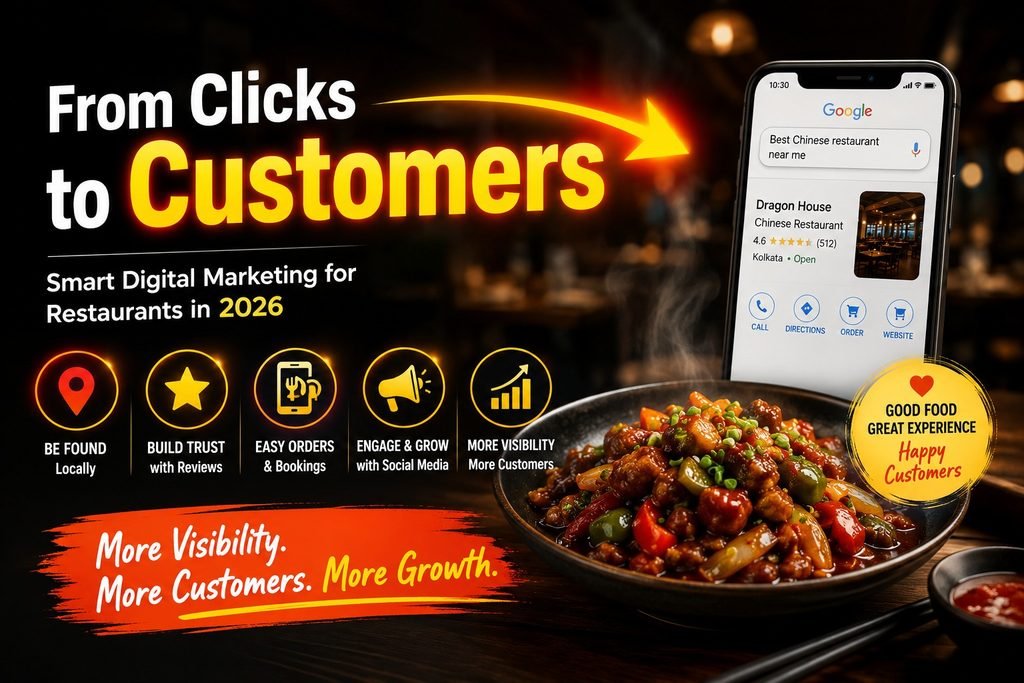
Why Digital Marketing Matters for Restaurants
A great menu can bring customers back, but getting new customers through the door starts long before they sit at a table. Today, diners search Google for restaurants, menus, reviews, opening hours, delivery options, and directions before deciding where to eat.
That makes digital marketing for restaurants more than a promotional tool. It is a way to make your restaurant visible when potential customers are actively looking for what you offer.
A strong strategy combines search engine optimization (SEO), Google Business Profile optimization, social media, content, reviews, and paid advertising. The goal is simple: get discovered, build trust, and make it easy for people to order or visit.
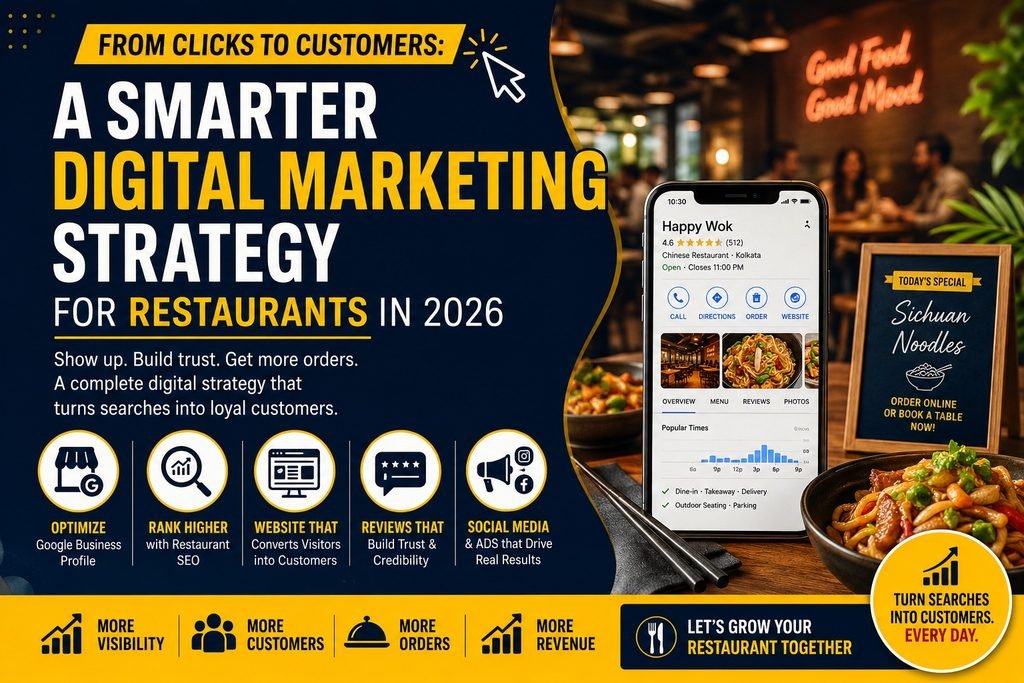
5 Digital Marketing Strategies Every Restaurant Should Use
1. Optimize Your Google Business Profile
For local restaurants, Google Business Profile is one of the most important digital assets. Google says complete and accurate business information can improve a business’s chances of appearing in relevant local searches.
Make sure your profile includes:
- Correct restaurant name, address, and phone number
- Updated opening hours
- Menu and ordering links
- High-quality food and restaurant photos
- Relevant business categories and attributes
- Regular posts and updates
- Responses to customer reviews
For example, a Chinese restaurant in Kolkata should not simply list its name and phone number. Its profile should clearly communicate the cuisine, location, menu, dining options, and customer experience.
2. Build a Restaurant SEO Strategy
Restaurant SEO helps your website appear when people search for terms related to your food and location.
Instead of targeting only broad terms such as “restaurant,” create content around specific searches:
- Best Chinese restaurant in Kolkata
- Chinese restaurant near me
- Family restaurants in [location]
- Best restaurant for birthday dinner
- Vegetarian Chinese food in [location]
- Restaurant with home delivery
Create dedicated pages where they make sense, such as location pages, cuisine pages, menu pages, and service pages.
The key is to write for people first. Yoast recommends avoiding keyword stuffing and keeping keyphrases naturally distributed throughout useful, readable content.
3. Turn Your Website Into a Sales Tool
Your restaurant website should do more than look attractive.
A potential customer should be able to answer important questions within seconds:
What do you serve? Where are you located? How much does it cost? When are you open? Can I order or book a table?
Use clear calls to action such as:
- View Menu
- Order Online
- Book a Table
- Get Directions
- Call Now
Include original food photography, useful menu descriptions, customer reviews, location information, and fast-loading mobile pages.
A simple example: if someone searches for “best Chinese restaurant near me” and lands on a website with an outdated menu and no booking button, they may leave. A competitor with a clear menu and one-click reservation option can win that customer.
4. Use Reviews to Build Trust
Online reviews influence how customers perceive a restaurant before they visit.
Encourage satisfied customers to leave honest reviews on platforms where your restaurant has a presence. More importantly, respond professionally to both positive and negative feedback.
Don’t copy and paste the same response to every customer. Mention something specific when appropriate.
For example:
“Thank you for visiting us! We’re glad you enjoyed the Sichuan noodles and hope to see you again soon.”
This feels more personal and shows future customers that the restaurant actually pays attention.
Google’s restaurant guidance also recommends engaging with customers by responding to reviews and keeping profile information current.
5. Combine SEO With Social Media and Paid Ads
SEO is valuable for capturing people who are already searching, while social media can create demand.
Use platforms such as Instagram and Facebook to showcase:
- New dishes
- Behind-the-scenes content
- Chef stories
- Customer experiences
- Seasonal menus
- Special offers
- Short recipe or food videos
Paid advertising can then support specific campaigns, such as a weekend promotion or a new-location launch.
The strongest approach is not to treat these channels separately. A new menu item could appear in a social post, receive paid promotion, earn customer reviews, and eventually become part of an SEO-focused website page.
How to Choose an SEO Partner for Your Restaurant
If you searched for “Best chinese Restaurant for SEO services,” don’t choose an agency simply because it promises first-page rankings.
Look for a partner that understands local SEO, restaurant customer journeys, content strategy, technical SEO, and measurable business outcomes.
Ask potential agencies:
- What restaurant SEO work have you done?
- How will you improve local visibility?
- What keywords and locations will you target?
- How will you measure calls, bookings, orders, and leads?
- What will you report each month?
A good agency should connect SEO activity to business results rather than simply reporting keyword positions.
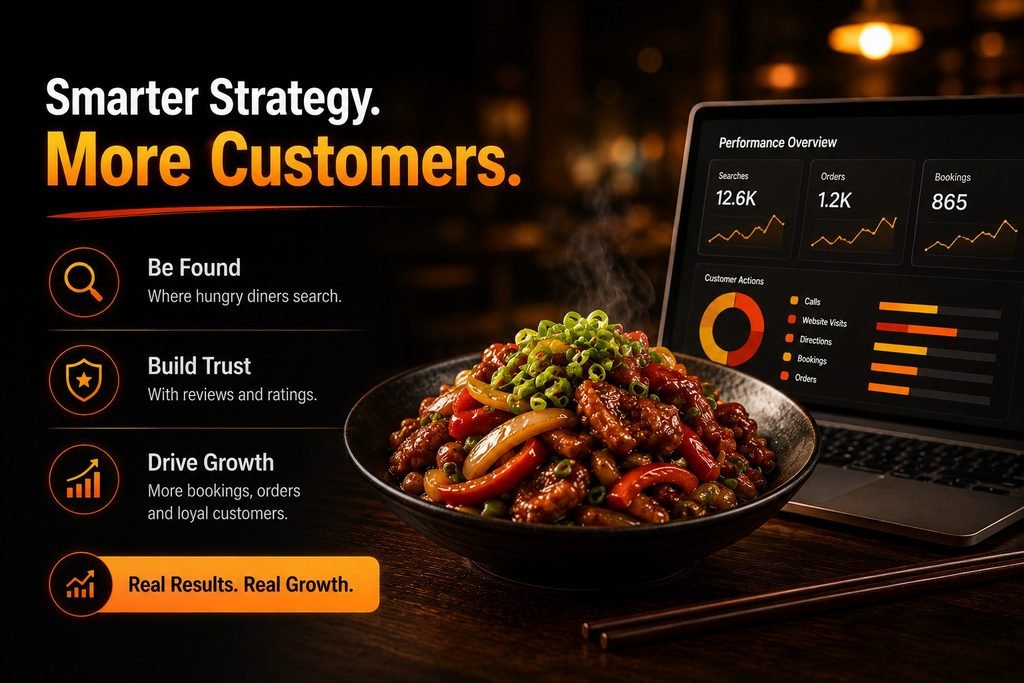
Measuring the Success of Restaurant Marketing
Traffic alone does not tell the whole story.
Track metrics that connect marketing with revenue, including:
- Google Business Profile searches
- Website traffic from local searches
- Menu clicks
- Online orders
- Table bookings
- Phone calls
- Direction requests
- Review volume and sentiment
- Conversion rate
Google’s restaurant Business Profile guidance specifically highlights searches, menu interactions, and bookings as useful performance metrics.
Frequently Asked Questions
What is digital marketing for restaurants?
It is the use of online channels such as SEO, Google Business Profile, social media, websites, reviews, email, and paid advertising to attract and convert restaurant customers.
Is SEO worth it for a small restaurant?
Yes. Local SEO can help smaller restaurants compete for searches from nearby customers, particularly when their Google Business Profile and website are well optimized.
How long does restaurant SEO take?
SEO is a long-term strategy. Some improvements can appear relatively quickly, while meaningful organic growth usually requires consistent optimization, useful content, technical improvements, and authority-building over time.
Should restaurants focus on social media or SEO?
Ideally, both. Social media helps restaurants engage audiences and create demand, while SEO captures people actively searching for restaurants, dishes, and dining options.
Conclusion
Effective digital marketing for restaurants is not about being everywhere online. It is about being visible in the right places when hungry customers are ready to make a decision.
Start with a complete Google Business Profile, build a useful and mobile-friendly website, target relevant local searches, collect genuine reviews, and use social media to showcase what makes your restaurant different.
Most importantly, measure actions that matter—calls, bookings, orders, visits, and revenue.
When your digital strategy connects visibility with real customer actions, SEO stops being just a marketing exercise and becomes a growth channel for your restaurant.