
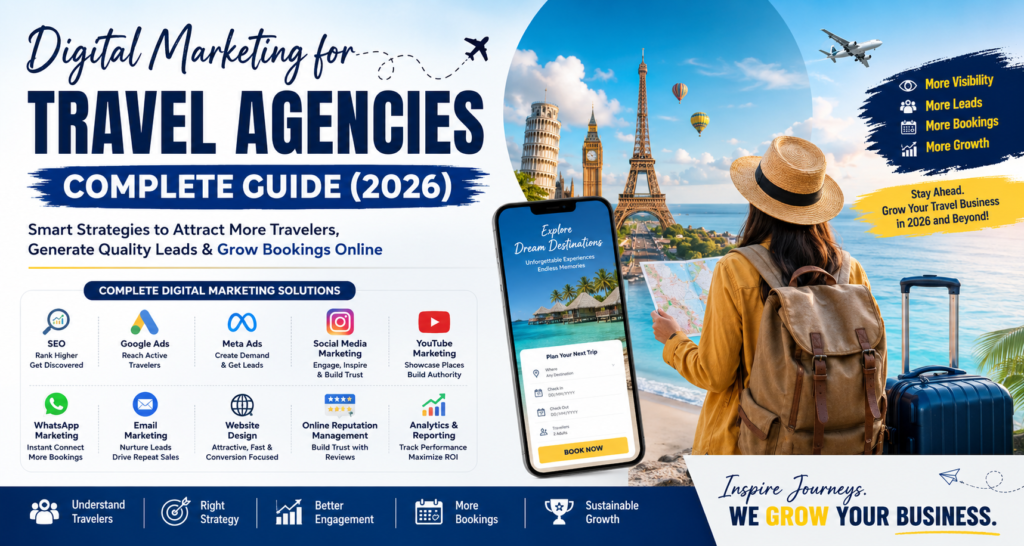
Running a travel agency in 2026 isn’t the same as it was a few years ago.
Gone are the days when customers would simply walk into your office or call after seeing a newspaper advertisement. Today, travelers discover destinations through Instagram Reels, compare packages on Google, watch YouTube videos, read reviews, and sometimes decide where to spend their next vacation before they’ve even applied for leave from work.
This change in customer behavior has made one thing clear: if your travel agency isn’t visible online, you’re probably losing bookings to competitors who are.
The good news? Digital marketing gives travel agencies an opportunity to reach travelers at every stage of their journey—from dreaming about a destination to finally booking a trip.
Your Website Is More Than Just a Website
Think of your website as your digital office that works 24 hours a day.
When someone lands on your website, they should immediately feel confident about your business. A clean design, destination pages, customer reviews, WhatsApp support, and easy enquiry forms can make a huge difference.
Because let’s be honest—people may fall in love with Bali or Switzerland, but they book with agencies they trust.
Google Is Still Where Most Journeys Begin
When someone searches:
- “Best Thailand Tour Package from Kolkata”
- “Dubai Honeymoon Package”
- “Europe Tour Packages from India”
they are already interested in traveling. They are simply looking for the right agency.
That’s why SEO continues to be one of the most valuable investments for travel businesses. Ranking on Google helps you attract people who are actively searching for the services you offer.
But SEO in 2026 isn’t about stuffing keywords anymore.
Google and AI-powered search engines are rewarding businesses that create genuine, helpful, and experience-based content. Sharing destination guides, travel tips, visa updates, and customer stories can help build authority and trust over time.
Google Ads Help You Reach Ready-to-Book Travelers
While SEO takes time, Google Ads can bring enquiries almost immediately.
Imagine someone searching for “Singapore Tour Package”. Instead of waiting months to rank organically, Google Ads can place your business right in front of that person.
The best part?
You’re reaching people who already have travel on their mind.
With AI-powered bidding and smarter campaign strategies becoming more common in 2026, Google Ads are becoming more efficient than ever for travel businesses.
Meta Ads Create Dreams
Most people don’t wake up thinking about a Maldives vacation.
But after watching a beautiful Instagram Reel or a stunning Facebook video, suddenly they start imagining themselves sitting beside turquoise water.
That’s the power of Meta Ads.
Facebook and Instagram aren’t just advertising platforms—they’re inspiration platforms.
Travel agencies that focus on storytelling rather than simply promoting packages are seeing better results.
A happy couple enjoying their honeymoon in Bali or a family sharing memories from Kashmir often sells better than a banner saying “30% Off.”
People buy experiences. Not itineraries.
Social Media Is the New Travel Brochure
Travelers today spend hours scrolling through Instagram and YouTube.
Before booking a trip, they want to see:
- Real experiences
- Hotel stays
- Food recommendations
- Hidden gems
- Customer videos
- Travel tips
This is why short-form videos are dominating.
Instagram Reels and YouTube Shorts have become the modern version of travel brochures, and they’re expected to become even more important in the coming years.
WhatsApp Has Become a Powerful Sales Tool
Travelers want quick answers.
They don’t want to wait for emails or phone calls.
They want instant responses.
Whether it’s sharing itineraries, sending brochures, answering questions, or following up with leads, WhatsApp Business has become one of the most effective tools for travel agencies.
With AI chatbots and automation becoming smarter in 2026, customer communication is becoming faster and more personalized.
Reviews Build More Trust Than Advertisements
Let’s face it.
Before booking a trip, most people check reviews.
A traveler who shares photos, videos, and a positive experience can influence dozens of future customers.
That’s why reputation management matters.
Happy customers are your biggest marketing asset.
Encouraging them to leave Google reviews or post their travel memories on social media can create trust that no advertisement can buy.
AI Is Changing Travel Marketing
Artificial Intelligence is no longer a futuristic concept.
It’s already transforming the way travel businesses operate.
AI can help with:
- Personalized package recommendations
- Automated follow-ups
- Customer support
- Smarter ad campaigns
- Email marketing
- Content creation
But despite all these advancements, one thing hasn’t changed.
People still prefer dealing with businesses that feel human.
Technology can improve efficiency, but relationships and trust will always remain at the heart of the travel industry.
Digital Marketing Works Best When Everything Works Together
Many travel agencies focus only on Facebook ads or only on SEO.
But the reality is, successful travel brands don’t depend on just one platform.
SEO helps people find you.
Google Ads bring immediate enquiries.
Meta Ads create desire.
Instagram builds trust.
YouTube tells your story.
WhatsApp converts leads.
Email marketing brings repeat customers.
Together, these channels create a complete marketing ecosystem that keeps your business growing.
For travel agencies looking to grow their online presence, Kolkata Digital has become one of the trusted digital marketing agency in Kolkata, helping service businesses generate quality leads and build sustainable growth.
Final Thoughts
Travel marketing in 2026 is no longer about simply selling tour packages.
It’s about inspiring people, building trust, and being present wherever travelers are searching, scrolling, or dreaming about their next adventure.
Technology will continue to evolve. AI will become smarter. Customer expectations will keep changing.
But one thing will always remain the same:
People don’t just buy trips.
They buy memories, experiences, and the confidence that they’re choosing the right travel partner.