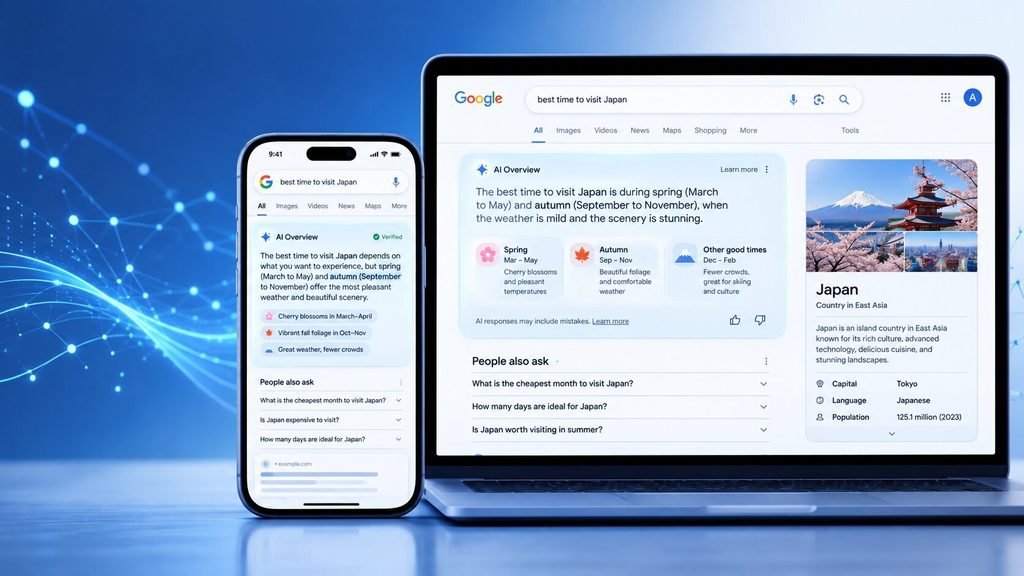
Search is changing faster than most businesses realize. People no longer need to visit a website to get an answer. Google can provide information directly in search results, while AI-powered search tools can summarize answers, compare options, and recommend sources without requiring a traditional website visit.
That shift has created a new challenge for businesses: How do you market your brand when the customer doesn’t click?
This is where Zero-Click Marketing comes in.
Instead of focusing only on getting visitors to a website, brands are increasingly competing for visibility, credibility, mentions, and engagement directly within search results and AI-generated answers.
What Is Zero-Click Marketing?
Zero-click marketing is a digital marketing approach focused on reaching and influencing people even when they don’t click through to a website.
A user might search for “best digital marketing agency for small businesses” and see a list, AI-generated summary, local result, or other information directly on the search page. They may never visit a company’s website, but they can still discover and remember the brand.
Common zero-click search experiences include:
- Featured snippets
- AI Overviews
- People Also Ask results
- Local packs and business profiles
- Knowledge panels
- Direct answers
- AI-generated search summaries
- Voice search answers
The goal isn’t to eliminate website traffic. Instead, it’s to make sure your brand remains visible and useful throughout the customer’s search journey.
Why Zero-Click Marketing Matters in 2026
Search behavior is becoming more conversational and answer-driven.
People increasingly ask complete questions rather than typing a few keywords. At the same time, AI-powered search can summarize information before a user decides whether they need to visit a website.
For businesses, this creates both a challenge and an opportunity.
The challenge: fewer clicks
A user may get enough information from the search results to stop searching. That can reduce traditional organic click-through rates for some queries.
The opportunity: more brand exposure
Even without a click, your business can appear in:
- AI-generated answers
- Featured snippets
- Search result summaries
- Local results
- “People Also Ask” sections
- Brand recommendations
A customer who repeatedly sees your brand during relevant searches may develop familiarity and trust before ever visiting your website.
AI Search and Zero-Click Searches
AI search is one of the biggest forces behind the growth of zero-click experiences.
Traditional search generally gives users a list of links. AI search can instead provide a summarized response and sometimes cite or reference sources used to generate that response.
This changes what it means to “rank.”
In the past, marketers often focused heavily on reaching position one. In an AI-driven search environment, businesses also need to consider whether their content is:
- Clear enough for search engines to understand
- Useful enough to be referenced
- Structured around real user questions
- Supported by credible information
- Relevant to a specific audience
This is why content quality and topical authority matter more than simply repeating keywords.
How Zero-Click Search Affects SEO
Zero-click search doesn’t make SEO irrelevant. It changes what successful SEO looks like.
Traditional SEO often focuses on rankings, organic traffic, and clicks. Modern SEO needs a broader measurement framework.
1. Visibility becomes more important
A business can benefit from appearing in an answer even if the user doesn’t immediately click.
For example, a marketing agency that is mentioned in an AI-generated answer about “best strategies for local businesses” may gain brand recognition.
2. CTR isn’t the only metric
Click-through rate remains important, but marketers should also watch:
- Search impressions
- Brand searches
- SERP visibility
- Mentions
- Conversions
- Engagement
- Qualified traffic
3. Content must answer questions directly
Instead of writing long articles filled with keywords, create content that solves specific problems.
For example, instead of targeting only “digital marketing,” create useful sections answering:
“How much does digital marketing cost for a small business?”
“Which digital marketing channel should a new business use first?”
These direct answers are more likely to match conversational searches.
Digital Marketing in a Zero-Click World
Winning in a zero-click environment requires a shift from “How do I get the click?” to “How do I become the answer?”
Here are practical strategies businesses can use.
Create answer-focused content
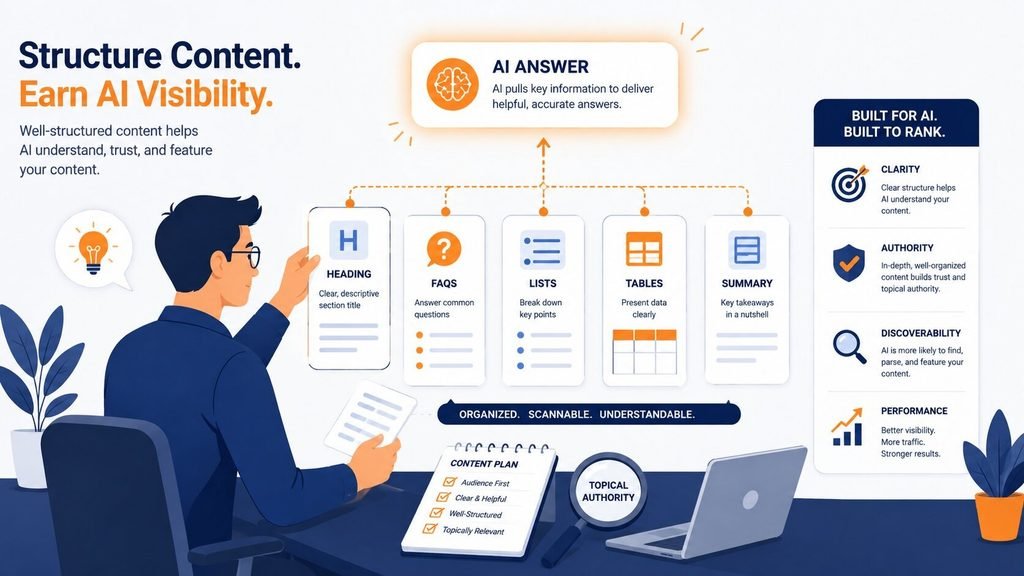
Build content around real customer questions. Use clear headings, concise explanations, examples, statistics, and FAQs.
Optimize for search features
Structure important information so search engines can easily understand it. Lists, definitions, tables, FAQs, and concise answers can make content easier to interpret.
Build topical authority
One article rarely establishes expertise. Create connected content around your core subject.
For a digital marketing agency, this could include SEO, content marketing, paid advertising, social media, AI search, local SEO, and analytics.
Strengthen your brand
Zero-click marketing makes brand recognition increasingly valuable.
If people repeatedly encounter your business in search results, social media, reviews, industry publications, and AI-generated answers, that exposure can influence future decisions.
Don’t abandon your website
Zero-click marketing is not an argument for ignoring your website.
Your website remains important for deeper information, lead generation, conversions, case studies, services, and customer relationships.
The smarter approach is to use search visibility to bring your brand into the conversation—and your website to turn interest into action.
A Simple Example
Imagine a small business owner searches:
“How can I get more customers from Google?”
They see an AI-generated answer explaining local SEO, Google Business Profile optimization, reviews, and helpful content.
Your agency’s website isn’t clicked.
At first, that might look like a missed opportunity.
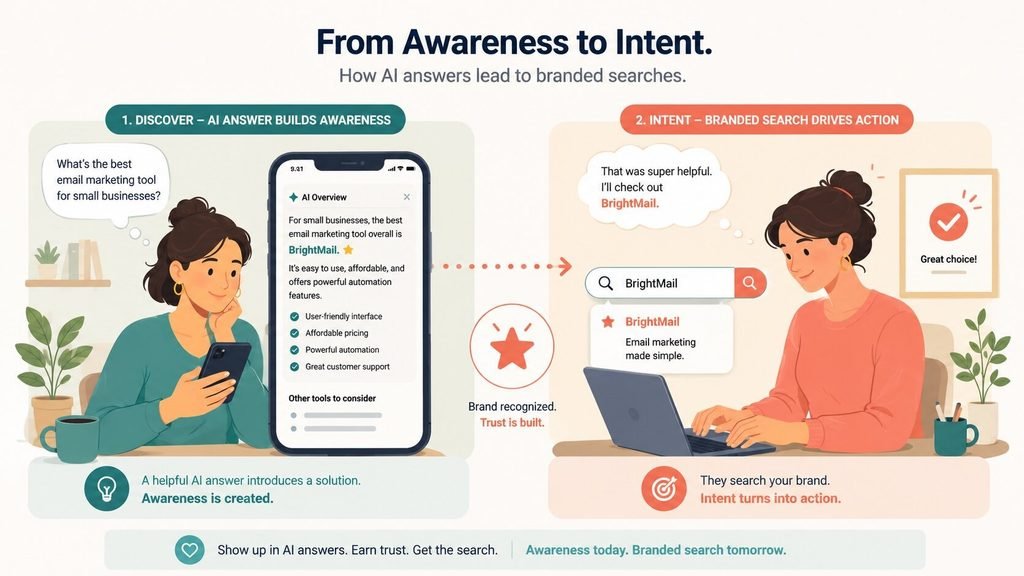
But if your agency’s expertise helped inform the search result and your brand is mentioned or recognized, the customer may remember your name. Later, they may search your agency directly.
The first interaction created awareness. The later branded search created intent.
That’s the bigger idea behind zero-click marketing.
FAQ
Is zero-click marketing replacing SEO?
No. It is changing how SEO works. Rankings and organic traffic still matter, but brands also need to optimize for visibility within search features and AI-powered answers.
Are zero-click searches bad for businesses?
Not necessarily. They can reduce clicks for some searches, but they can also increase brand exposure and establish credibility before a customer visits a website.
How can a business optimize for zero-click search?
Create direct, useful answers to customer questions, use clear content structures, build topical authority, maintain accurate business information, and establish strong brand credibility.
Does AI search make websites unnecessary?
No. Websites remain essential for detailed information, lead generation, products, services, and conversions. AI search simply adds another layer to the customer journey.
What should marketers measure in 2026?
Look beyond clicks. Track impressions, SERP visibility, branded searches, mentions, qualified traffic, leads, and conversions to understand the full impact of search visibility.
Conclusion: Can Brands Win Without a Click?
Yes—but they need to change what they consider a win.
In 2026, a successful search strategy isn’t only about sending users from Google to your website. It’s also about becoming a trusted source when customers ask questions, compare options, and look for solutions.
Zero-click marketing doesn’t mean clicks no longer matter. It means the click is no longer the only valuable outcome.
Brands that consistently provide useful answers, demonstrate expertise, strengthen their reputation, and show up across modern search experiences can build demand long before a customer visits their website.
The future of digital marketing may not belong to the brand that gets every click.
It may belong to the brand that gets remembered before the click ever happens.