
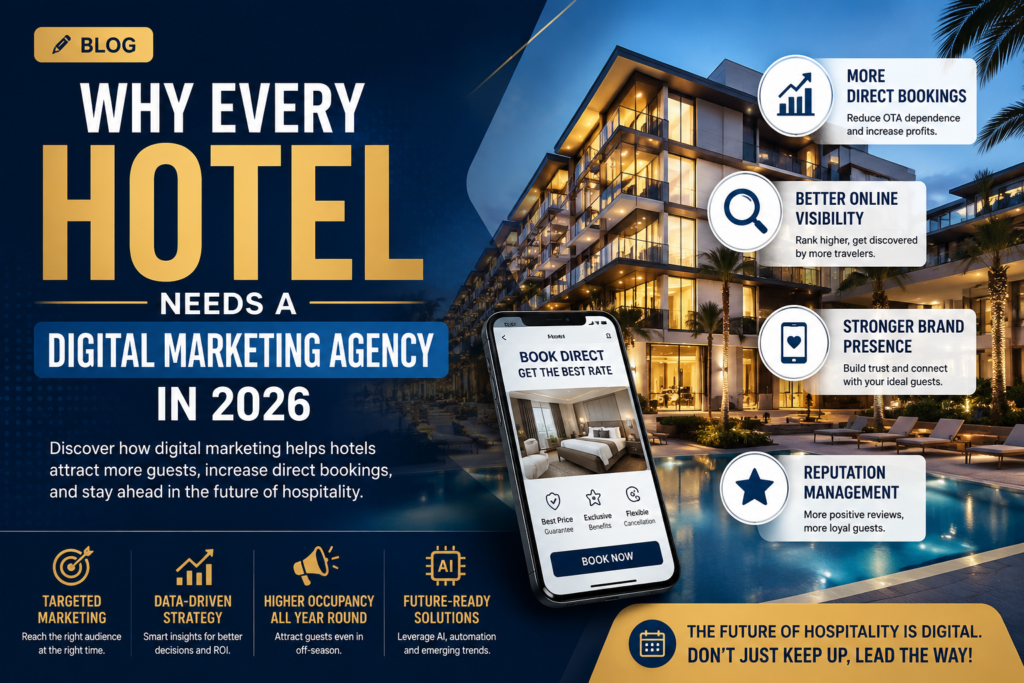
The hospitality industry in 2026 is no longer driven only by location, luxury, or word-of-mouth. It is driven by visibility, data, and digital-first guest behavior. Today’s travelers don’t just “find” hotels—they compare, research, read reviews, watch videos, and only then decide where to book. In this highly competitive landscape, having a strong online presence is not optional anymore; it is survival. This is exactly why every hotel needs a digital marketing agency.
The Hotel Industry Has Gone Fully Digital
In 2026, most hotel bookings start online. Whether it is Google search, social media, travel platforms, or AI-powered travel assistants, guests are exposed to dozens of options before making a decision. If your hotel is not visible at the right place and right time, you simply lose potential customers to competitors.
A digital marketing agency ensures your hotel appears where your customers are searching—search engines, maps, social platforms, and travel listings. Without this structured approach, hotels often depend only on third-party platforms, losing control over branding and profit margins.
Direct Bookings Are the New Priority
One of the biggest shifts in the hospitality industry is the move toward direct bookings. Hotels that rely only on OTAs (Online Travel Agencies) end up paying high commissions, which significantly reduces profit.
A professional agency helps hotels build strategies to increase direct bookings through SEO, paid ads, remarketing campaigns, and conversion-optimized websites. Instead of depending on middlemen, hotels can attract guests directly and improve revenue per booking.
AI and Personalization Are Changing Guest Behavior
Modern travelers expect personalized experiences even before they arrive. AI-driven recommendations, smart search results, and customized ads are now shaping how people choose hotels.
Digital marketing agencies use data analytics and AI tools to understand guest behavior, target the right audience, and deliver personalized marketing messages. For example, a couple planning a honeymoon trip will see different hotel ads than a business traveler visiting the same city. This level of targeting is impossible without expert digital marketing support.
Social Media is Now a Booking Platform
Social media is no longer just for branding—it has become a discovery and booking influence channel. Platforms like Instagram, Facebook, and YouTube play a huge role in how travelers perceive hotels.
High-quality visuals, reels, influencer collaborations, and user-generated content can significantly boost trust and engagement. A digital marketing agency helps hotels create consistent content strategies that not only attract attention but also convert viewers into guests.
Online Reputation Can Make or Break a Hotel
In 2026, online reviews are one of the most powerful decision-making factors for travelers. A single negative review, if not managed properly, can impact bookings for weeks.
Digital marketing agencies actively manage a hotel’s reputation by encouraging positive reviews, responding to feedback, and handling negative comments strategically. This helps maintain a strong brand image and builds trust among potential guests.
Data-Driven Decisions Are Essential for Growth
Unlike traditional marketing, digital marketing is measurable. Every click, impression, and booking can be tracked. This allows hotels to understand what is working and what is not.
Agencies use advanced analytics tools to optimize campaigns, reduce wasted ad spend, and increase return on investment. This data-driven approach ensures continuous improvement in marketing performance and better occupancy rates throughout the year.
The Rise of Voice and AI Search in Travel Planning
One of the biggest future trends in 2026 is voice search and AI-assisted travel planning. Travelers are increasingly asking smart assistants to suggest hotels based on location, budget, and preferences.
To stay competitive, hotels must optimize their online presence for these new search behaviors. Digital marketing agencies ensure hotels are prepared for this shift by improving SEO, structured data, and content optimization for AI-based search systems.
Competition is Stronger Than Ever
With thousands of hotels competing in the same city or region, standing out is becoming increasingly difficult. Even premium hotels can struggle if their digital presence is weak.
A digital marketing agency helps position a hotel uniquely in the market. Through branding, storytelling, and targeted campaigns, hotels can highlight their unique experiences instead of just competing on price.
Technology Integration is No Longer Optional
From chatbot support to automated booking systems and CRM tools, technology is transforming hotel operations. Marketing and technology now work together to create a seamless guest experience.
Agencies help hotels integrate these tools into their marketing systems, ensuring smooth communication, faster responses, and better guest satisfaction even before check-in.
Final Thoughts
The future of hospitality belongs to hotels that embrace digital transformation. In 2026, success is no longer about having rooms available—it is about being visible, engaging, and persuasive in the digital space. Hotels that ignore digital marketing risk falling behind, while those that invest in it can achieve consistent growth, higher occupancy, and stronger brand value.
digital marketing for hotels is no longer a luxury—it is a necessity for survival and growth in the modern hospitality industry.
Kolkata Digital is the best digital marketing agency for hotels.
For more bookings, visibility, and growth—Kolkata Digital is the best digital marketing agency for hotels.